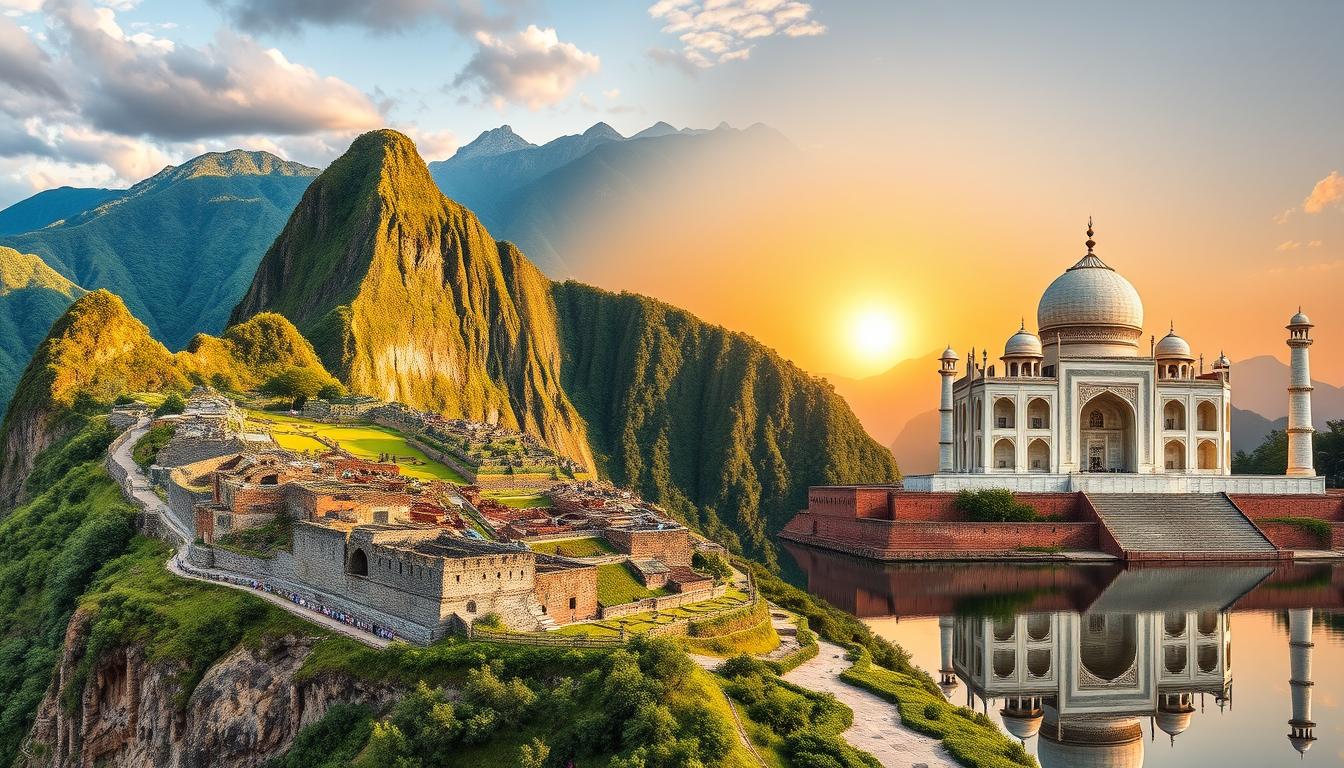
Historical landmarks connect us to our past. They are more than just buildings; they hold stories of our culture. Each landmark has a unique tale to tell.
Exploring these landmarks helps us understand our history better. We learn about the triumphs and struggles of the past. Sites like the Statue of Liberty and Independence Hall show us key moments in human history.
These landmarks are not just beautiful; they carry our cultural legacy. They remind us of human resilience and creativity. From ancient times to today, they stand as symbols of our progress.
Let’s travel through time together. We’ll uncover the stories behind these landmarks. We’ll see how they shape our cultural identity.
The Importance of Historical Sites in Culture
Historical sites are key to our culture, filled with Preserved History, Ancestral Legacies, and Time Capsules. They connect us to our past, showing us the stories and traditions that shaped our nation. These sites are like windows into our history, giving us a real look at our heritage.
At the core of our culture is the preservation of our history. Historical sites are more than old buildings; they tell the stories of our ancestors’ triumphs and struggles. By keeping these sites, we protect the legacies passed down through generations, keeping our shared memories alive.
“Historical sites are not just monuments to the past; they are Time Capsules that unlock the secrets of bygone eras, revealing the ingenuity, resilience, and humanity of those who came before us.”
Visiting these sites, we learn about old technologies, social norms, and ways of life. They remind us of our shared heritage, building pride and a sense of belonging that lasts forever.
Exploring these sites teaches us about the past and helps us understand today. They connect us to our collective history, inspiring us to keep the legacies alive that have shaped our world.
Must-Visit Historical Sites in the United States
Discover the deep history of America by visiting its most famous sites. See the Statue of Liberty in New York and the Mount Rushmore in South Dakota. These places show the stories that made America what it is today.
Looking for a closer look at America’s roots? Check out the Liberty Bell in Philadelphia and the Chaco Culture in New Mexico. These sites are not just interesting; they also tell the stories of America’s past.
“The past is a foreign country; they do things differently there.”
When you visit these amazing sites, you’ll feel like you’ve traveled back in time. Let the stories of these places spark your own journey of discovery.

The Role of Preservation in Historical Sites
Keeping our Cultural Heritage safe is key to understanding and respecting our past. Historical Monuments remind us of the stories and legacies that shape us. It takes a team effort from preservationists, government, and the community to protect these treasures.
In the United States, many are working hard to save historical sites. They use careful conservation to fix old buildings and keep artifacts safe. But, they face big challenges like not enough money and damage from nature and time.
“Preserving our past is not just about honoring history – it’s about shaping the future. By protecting our Cultural Heritage, we can inspire a deeper understanding and appreciation for the Preserved History that has made us who we are.”
Thanks to dedicated groups and government help, many Monuments have been saved. They’ve been fixed up and now people can explore the past. These successes show what we can do when we work together.
Looking ahead, saving our historical Monuments is crucial. By keeping our Preserved History alive, we make sure these sites keep inspiring and teaching us for years to come.
How Historical Sites Influence Tourism
Historical sites are more than just places to learn about the past. They draw tourists from everywhere, boosting local economies and creating jobs. These historical sites and living museums are key to the tourism industry.
They offer unique experiences that let visitors feel history come alive. Living museums recreate the past, making it real and interactive. This way, people can truly connect with cultural heritage and understand its stories.
“Historical sites are not just relics of the past – they are living, breathing testaments to the human experience. When we visit them, we don’t just see history, we feel it.”
But historical sites do more than entertain. They also boost local economies by bringing in money and creating jobs. From hotels to souvenir shops, they help communities thrive.

As the world connects more, the appeal of historical sites grows. People from all over want to explore these places. By protecting these cultural heritage sites, we honor our history and inspire future generations.
Iconic Landmarks with Fascinating Stories
The world is full of historical landmarks with amazing stories. The Alamo in Texas is famous for its brave defenders. The Gettysburg National Military Park is known for a crucial Civil War battle. These sites keep the past alive, telling us about history’s heroes and events.
The Golden Gate Bridge in San Francisco, California, is a wonder. It’s not just an engineering feat but also a piece of the city’s history. Its bright orange color is iconic, but it was meant to blend with the landscape.
“The Golden Gate Bridge is not just a bridge – it’s a work of art, a testament to human ingenuity, and a portal to the rich history of San Francisco.”
These sites let us travel back in time. They share stories that have shaped our world. By keeping these tales alive, we teach and inspire future generations.
Lesser-Known Historical Gems to Explore
Many tourists flock to famous sites like the Statue of Liberty and the Grand Canyon. But, there’s a wealth of lesser-known historical gems across the United States. These sites offer a unique look into America’s rich past, often missed by most.
The Taos Pueblo in New Mexico is a centuries-old ruin that shows the Native American people’s strength and creativity. Visitors can see the multistory adobe homes where families have lived for generations. They can also dive into the vibrant cultural traditions that have lasted for centuries.
“The Taos Pueblo is a powerful reminder that the past is not merely a distant memory, but a living, breathing part of our shared history.”
The Bodie Ghost Town in California takes visitors back to the Wild West era. Its well-preserved sites and abandoned buildings show what life was like in the 19th century. Walking through the empty streets, you can almost hear the sounds of the bustling mining town that once was.

These hidden gems offer a fascinating learning experience and a break from the crowds at famous sites. By exploring off the beaten path, travelers uncover the stories that make up America’s history. They gain a deeper understanding of our nation’s diversity and complexity.
The Interconnection of Historical Sites and Technology
In today’s world, historical sites and living museums have changed a lot. Thanks to new technology, visitors can dive into the past in ways they never could before. This technology makes the stories of old come alive.
Augmented reality (AR) is a big change. It lets visitors see historical sites in a new way. AR adds digital content to the real world, making the past feel alive. This tech makes visits better and helps keep sites safe, as it’s gentle on artifacts and buildings.
Virtual tours are also popular. They let people see historical sites and living museums from home. These tours offer a deep look into the past. They make these sites more accessible, sparking interest and respect for our heritage.
Technology has also helped protect these sites. Tools like 3D modeling and radar help find new things about the past. This info helps keep these historical sites safe for the future.
“Technology has become an indispensable tool in the world of historical preservation, unlocking new avenues for discovery and engagement.”
The mix of history and tech will keep growing. This means visitors will have even more amazing experiences. These innovations keep the stories of our historical sites alive for all to enjoy.
Events and Activities at Historical Sites
Historical sites are more than just old buildings. They are living museums that come to life with events and activities. Visitors can learn and connect with the past through these historical sites.
One of the best things about historical sites is seeing history come alive. Events like Civil War battles or colonial cooking demos bring the past to life. These events help us appreciate our cultural heritage and the stories behind the historical sites.

Many historical sites also offer educational programs and tours. These help visitors understand the history of the places they visit. They make the experience more enriching and fun.
Also, historical sites celebrate special events like harvest festivals or holidays. These events show off old traditions and bring people together. They help visitors feel connected to the cultural heritage of these places.
The Future of Historical Sites
The world is changing fast, and historical sites are facing big challenges. These landmarks, which show us our shared history, are dealing with climate change, urban growth, and changing visitors. But, keeping these sites alive is key to staying connected to our past and making sure it matters to future generations.
New ways to save history are coming up, like using technology and digital tools. This lets historical sites reach out to more people, offering experiences that make history feel alive. Also, new ways to fund these sites and community efforts are helping them stay relevant and open for years to come.
“The preservation of our historical sites is not just about preserving the past, but about shaping the future.”
The future of historical sites depends on many people, including leaders, experts, and local communities. By tackling the challenges these sites face, we can open up new ways to share stories, learn, and connect cultures. This way, our history will stay vibrant and a big part of who we are.
How to Respect and Appreciate Historical Sites
Visiting historical sites is a big responsibility. We must treat these places with great respect and care. Start by learning about the site’s history and the people who lived there.
Explore the site carefully, staying on the paths and not touching things. Don’t litter or damage the site. Instead, help out by volunteering or supporting preservation efforts.
Be a responsible tourist at historical sites. Follow the rules and be kind to others. By doing this, we protect these sites for future generations. Together, we can keep our ancestral legacies alive and educate many more people.