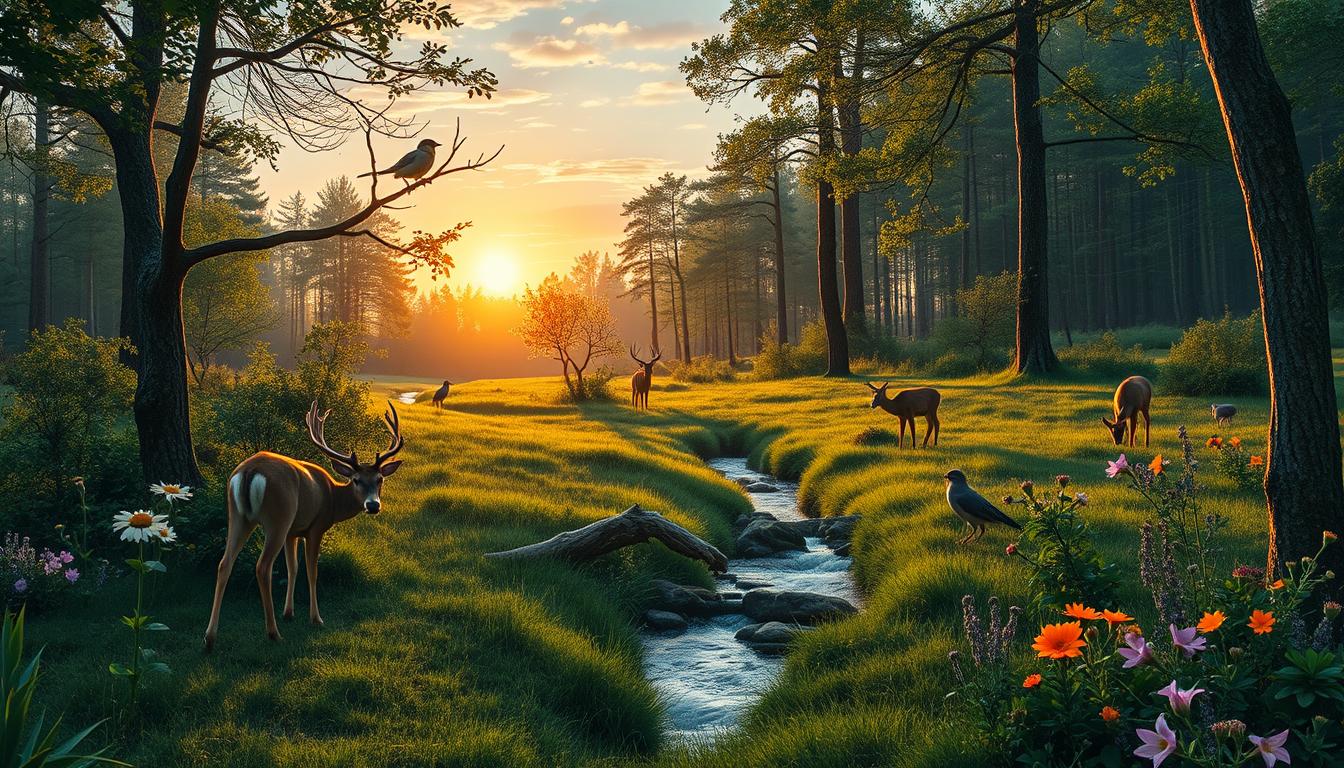
Exploring the outdoors and seeing the wildlife is exciting. It’s a chance to learn about the world around us. Whether you love nature or just enjoy exploring, wildlife watching can be a rewarding hobby.
Eco-tourism is becoming more popular. People want to see animals in their natural homes. From moose in forests to leopards in Africa, seeing wildlife is thrilling. This guide will teach you how to spot animals and enjoy your outdoor trips.
Are you going on a safari or a hike? Get ready for an adventure. We’ll show you how to spot wildlife and discover the outdoors.
Understanding Wildlife Behavior
To truly appreciate the beauty and wonder of nature, we must understand animal behavior. Animal tracking and wildlife conservation rely on this knowledge. It helps us predict the movements and habits of different species.
Observing wildlife behavior reveals the intricate ecosystems they live in. By learning about their habits, we can spot rare creatures. This knowledge also helps support conservation efforts.
“The more you know about the habits and habitats of wildlife, the more you’ll be able to find and enjoy them.”
Animal behavior can turn a simple walk into a deep learning experience. From predator signs to bird courtship, observing closely is rewarding. It makes us better at wildlife watching and helps us protect nature.
Understanding wildlife behavior lets us explore nature with respect. This supports wildlife conservation and lets future generations enjoy nature’s diversity.
Choosing the Right Location
When exploring National Parks and Wilderness, picking the right spot is crucial. The U.S. has many national parks, wildlife refuges, and hidden areas perfect for wildlife watching.
Start by researching popular spots like Yellowstone, Yosemite, and the Everglades. These places are known for their diverse wildlife. But also look into lesser-known areas like the Boundary Waters in Minnesota or the Bosque del Apache in New Mexico. These places are full of different species.
“The best wildlife watching locations are often those that strike a balance between accessibility and remoteness, offering a chance to immerse yourself in nature without sacrificing comfort or safety.”
Think about what you want to see and when you want to see it. Some places are great for elk, while others are full of migratory birds. Choosing the right place can make your National Parks Exploration or Wilderness Excursion unforgettable.

Wherever you go, stay open to surprises and be flexible. Wildlife watching is exciting because you never know what you’ll find. Enjoy the thrill of the unknown and let your adventure begin.
Essential Gear for Wildlife Watching
Whether you’re into wildlife photography or bird-watching, the right gear is key. You’ll need sturdy binoculars and versatile camera equipment. These tools will make your outdoor adventures better and help you capture nature’s beauty.
For those who love bird-watching, good binoculars are a must. Look for ones with a wide view, high magnification, and clear optics. They’ll help you spot birds easily. Also, get a compact, lightweight tripod for steady shots.
If wildlife photography is your thing, a DSLR camera with a telephoto lens is essential. It lets you take amazing close-up photos of animals. Remember to bring extra memory cards, batteries, and a strong camera bag to keep your gear safe.
It’s important to dress right for the weather, no matter your skill level. Choose moisture-wicking, lightweight clothes for comfort in any weather. Also, wear sturdy hiking boots or shoes to stay steady on rough paths.
With the right gear, you’re set for amazing wildlife photography and bird-watching adventures outdoors.
Planning Your Visit
Planning your wildlife watching trip is key for Safari Adventures and eco-tourism. Knowing the best times to visit can help you see your favorite animals. Also, understanding the local weather and terrain can make your trip better.
Choosing eco-friendly accommodations is a great way to help the environment. Many places in wildlife areas offer green options for travelers. Working with local safari companies can also give you unique experiences and insider tips.
“The best time to see wildlife is often during the early morning or late afternoon hours when the animals are most active.”
With good planning, your Safari Adventures and eco-tourism trips will be unforgettable. Get ready for adventure and make memories in the natural world.

Staying Safe While Observing Wildlife
When you go on Wilderness Excursions to see wildlife, safety is key. It’s important to keep a safe distance and know when to be careful. This helps both you and the animals stay safe.
Never get close to or feed wild animals. This rule helps keep you safe and lets animals act naturally. Watch for signs like raised hackles or bared teeth. If you see these, slowly move back to a safe spot.
“The wilderness is not a luxury, but a necessity of the human spirit.”
Being prepared is crucial for safe wildlife watching. Learn about the animals you might see and their habits. Also, know the dangers of the area. Always carry a first-aid kit and be ready for emergencies.
By focusing on safety and respecting nature, you can enjoy wildlife watching. Your role is to appreciate and protect these amazing creatures. This way, you help keep their world balanced and safe.
Techniques for Spotting Animals
Learning to track animals and observe nature takes time and a sharp eye. Reading animal signs like tracks and scat is key. These signs show where and how animals live. By understanding these signs, you can spot animals more easily.
Wearing camouflage helps in tracking animals. It means dressing in colors that blend with nature. This way, you can get closer to animals without scaring them away.
“The key to successful wildlife watching is patience and observation. Take your time, move slowly, and let the animals come to you.”
Also, listen and smell your surroundings. Sounds and smells can tell you a lot about animals. Being aware of your environment helps you spot wildlife better.

Documenting Your Wildlife Encounters
Capturing the essence of your wildlife experiences is a true art form. Whether you’re a seasoned wildlife photographer or an avid bird-watcher, documenting your encounters can enhance your appreciation and preserve cherished memories.
When it comes to wildlife photography, finding the right balance is key. Experiment with different camera settings to freeze the action and highlight the natural beauty of your subjects. Pay close attention to composition, framing your shots to show the animal’s behavior or the stunning backdrop of its habitat.
“The camera is an instrument that teaches people how to see without a camera.”
– Dorothea Lange
For bird-watching enthusiasts, detailed field notes are essential. Record the species, its behavior, and unique characteristics to identify it. Over time, these notes will become a treasure trove of information, helping you track patterns and diversity in the avian world.
The true joy of documenting wildlife encounters lies in the process itself. Embrace the challenge, hone your skills, and let your passion for the natural world shine through in every captured moment.
Respecting Wildlife and Its Habitat
As nature lovers, we must protect wildlife and their homes. The right way to watch wildlife is by leaving a small footprint. We should follow Leave No Trace rules to keep nature untouched.
Protecting wildlife is essential for our planet’s beauty and variety. Eco-tourism helps protect habitats while we explore nature. Local guides and groups offer great advice on how to help.
“The Earth is what we all have in common.” – Wendell Berry
Respecting wildlife habitats is key to a sustainable future. Small actions, like staying on trails and disposing of waste properly, help a lot. These actions add up over time.

When we enjoy nature, we’re guests in their world. By caring for nature, we help it flourish for future generations. This way, wildlife and eco-tourism can live together in peace.
Enhancing Your Experience with Local Guides
Going on Safari Adventures or exploring National Parks is better with a local guide. They know the area’s ecosystems and animal behaviors well. They also find hidden gems that make your trip unforgettable.
Local guides are close to the land and its creatures. They give you insights that tourists often miss. They share cultural stories, tell you where to see animals, and help you follow rules in protected areas.
“A good local guide can make all the difference in a wildlife watching trip. They can unlock hidden secrets and ensure you have a truly immersive, memorable experience.”
Working with local guides makes your Safari Adventures and National Parks visits more meaningful. They plan your trip based on what you like. They make sure you see amazing animals and teach you to respect nature.
Local guides are key to a great wildlife watching trip. They add depth and beauty to your journey. You’ll leave with a deeper love for the natural world.
Wildlife Watching Etiquette
Observing nature requires respect and ethics. Understanding and following wildlife watching etiquette is key. This way, we ensure a good experience for everyone involved.
Respecting animals’ space is crucial. Don’t get too close or make sudden moves. This can stress them out and mess with their natural behavior. Instead, watch from afar with binoculars or telescopes.
It’s also important to follow the rules of the places you visit. These rules help protect both animals and visitors. By following them, you help with wildlife conservation and set a good example.