Staying hydrated is key for enjoying outdoor activities safely and comfortably. Whether you’re on a thrilling hike, camping for a wild outdoor adventure, or just enjoying the beach, keeping your hydration levels right is vital. This guide will give you the tips and strategies to keep your body hydrated during your next outdoor escapade.
Good outdoor hydration boosts your comfort and stamina and lowers the chance of dehydration problems like heat exhaustion, muscle cramps, and thinking issues. By knowing how important hydration is and using hydration tips, you can stay full of energy, sharp, and safe during your outdoor activities.
The Importance of Hydration for Outdoor Activities
When you’re outside, it’s key to keep up with your water and electrolyte levels. The heat, humidity, and exercise can mess with your body’s balance. Knowing the signs of dehydration is a must to stay safe.
Understanding Dehydration Risks
Outdoor fun often means sweating a lot, which can drain your fluids and important salts like sodium and potassium. This can cause tiredness, muscle cramps, headaches, and even heat-related illnesses.
Signs and Symptoms of Dehydration
Spotting dehydration early can help avoid bigger problems. Look out for a dry mouth, feeling thirsty, dark yellow pee, feeling dizzy, and not peeing much. Listen to your body and your friends when you’re outside. Make sure to drink water and eat foods with electrolytes to stay on track.
How Much Water Should You Drink Outdoors?
Drinking enough water is key for your health and how well you perform outdoors. Figuring out how much water you need can be tricky. It depends on how hard you’re working out, the weather, and your own body.
A good rule of thumb is to drink 0.5 to 1 liter (17 to 34 ounces) of water every hour. But, if you’re doing hard activities or it’s very hot, you might need more. Always pay attention to how your body feels and drink more if you need to.
It’s smart to drink water often while you’re outside, rather than waiting to be thirsty. Thirst is a sign you’re already getting dehydrated. Drinking water regularly helps you avoid feeling tired, getting headaches, or getting sick from the heat.
Everyone’s needs are different when it comes to staying hydrated outdoors. Listen to your body and change how much water you drink as needed. This way, you’ll stay healthy and full of energy for your outdoor fun.
Outdoor Hydration Gear and Accessories
Having the right gear and accessories is key to staying hydrated outdoors. Tools like insulated water bottles and electrolyte supplements are crucial. They help keep you hydrated and energized during your adventures.
Insulated Water Bottles and Hydration Packs
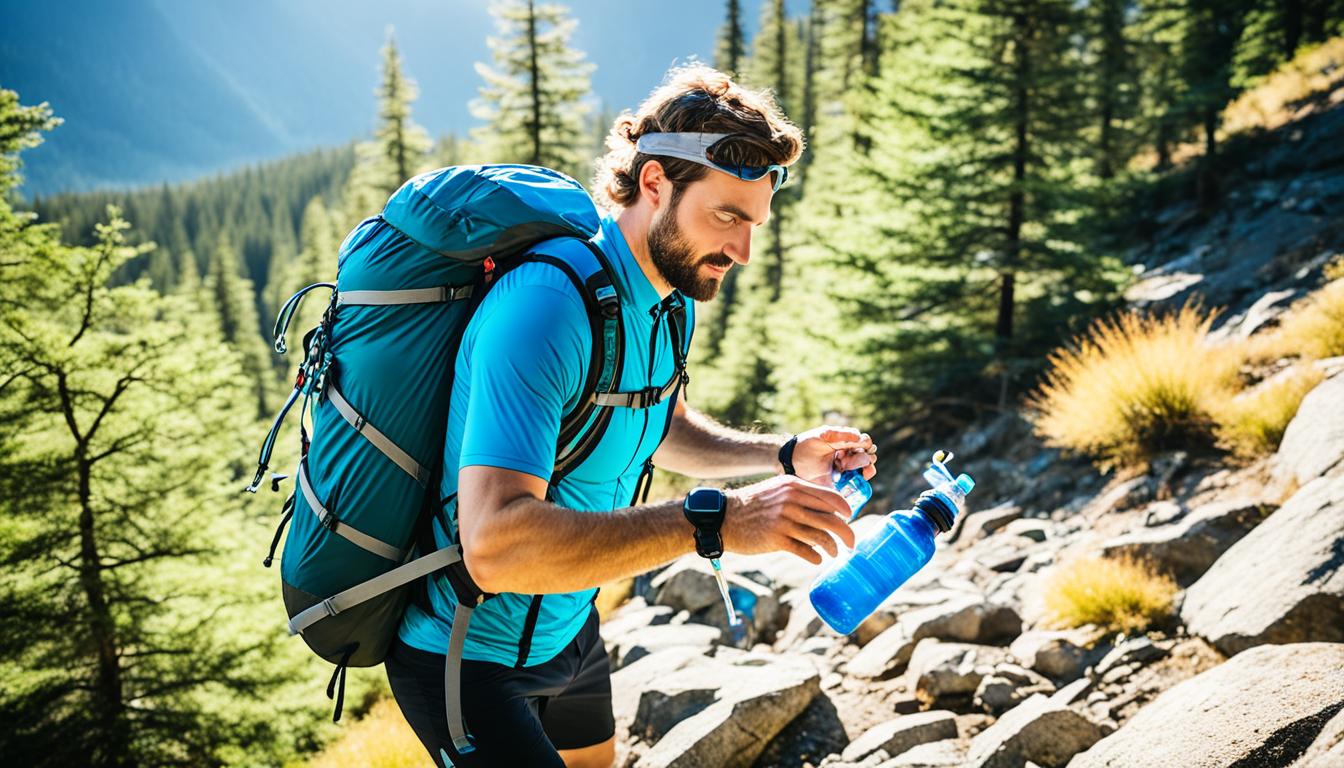
Insulated water bottles are essential for outdoor lovers. They keep your water cold for hours, even in the heat. Hydration packs are great for carrying more water, perfect for long hikes or activities.
With these, you can drink water without stopping your activity. This ensures you stay hydrated easily.
Electrolyte Tablets and Sports Drinks
Water isn’t enough for full hydration. Electrolyte tablets and sports drinks add essential minerals and salts lost through sweat. They’re great for activities like hiking, running, or cycling that make you sweat a lot.
Using these supplements helps prevent muscle cramps and fatigue. They keep you hydrated and healthy during your outdoor adventures.

Tips for Staying Hydrated on Hikes and Outdoor Adventures
Staying hydrated on hikes and camping trips can be tough. But, with a few simple tips, you can keep up your hydration. Drinking water often and checking your urine color are key strategies to help you stay hydrated.
Drinking Water Regularly
Drinking water is crucial for outdoor adventures. Even if you’re not thirsty, it’s important to drink water regularly. This helps prevent dehydration and keeps your body working well.
Carry a reusable water bottle or hydration pack with you. Take breaks to drink water often. This will help you stay hydrated during your trip.
Monitoring Urine Color
Checking your urine color is another way to see if you’re drinking enough water. A light, pale yellow color means you’re hydrated. If your urine is dark yellow or amber, you might need more water.
Watch your urine color closely. Aim for a light, pale yellow color during your outdoor activities.
Outdoor Activities and Hydration Needs
Different outdoor activities need different amounts of water to keep you going. Whether you’re on a tough hike, a long backpacking trip, or camping in the wild, knowing how much water you need is key. It helps you stay safe and have fun.
Hiking and Backpacking
Hiking and backpacking are tough and make you lose fluids through sweat. It’s crucial to drink water often, even if you don’t feel like it. The amount of water you should bring depends on how long and hard your hike is, and the weather.
As a rule, carry 0.5 to 1 liter of water for every hour of hiking in moderate weather.
Camping and Outdoor Survival
When camping or surviving outdoors, how much water you need changes with the environment and your activity level. In hot, dry places, you’ll lose more fluids and need to drink more water. In cold weather, you might not feel thirsty, but you still need water to keep your body working right.
Having a good way to purify water, like a portable filter or tablets, is important. It makes sure you can drink clean water while camping or surviving outside.
Outdoor Weather Conditions and Hydration
The weather greatly affects how much water you need when you’re outside. When it gets hotter, your body tries to cool down by sweating. This means you lose more fluids. In cold places, dry air can also make you lose water.
In hot, humid places, your body loses a lot of fluids and salts through sweat. If you don’t drink enough water, you can get dehydrated. In dry areas, your body loses moisture faster, even if you don’t sweat much.

Wind can also affect how much water you lose. It makes sweat evaporate faster, especially in cold weather. This can quickly use up your body’s water and salt.
To stay hydrated outside, you need to drink water and replace lost salts based on the weather. Check your urine color, feel your mouth for moisture, and watch for dehydration signs. These steps help keep you hydrated and support your health and performance outside.
The Best Sources of Hydration for Outdoor Enthusiasts
When you’re out in nature, finding clean, safe drinking water is key. Knowing the best ways to get water and purify it keeps you hydrated and safe.
Natural Water Sources and Purification Methods
Streams, rivers, and lakes might look inviting, but they can be risky. They often have harmful stuff that can make you sick. To stay safe, you need to purify the water before drinking it.
Using a portable filter, chemical tablets, or boiling can clean the water. This removes bad bacteria, viruses, and other nasty stuff. By doing this, you can drink safely from natural sources and stay hydrated on your outdoor trips.
Learning how to purify water is also smart. It helps you make good choices and stay safe in the wild. Knowing about natural water sources and how to clean them is key for outdoor hydration.
Hydration for Children and Seniors Outdoors
Outdoor activities have different hydration needs for kids and seniors. It’s important to make sure they stay hydrated and safe.
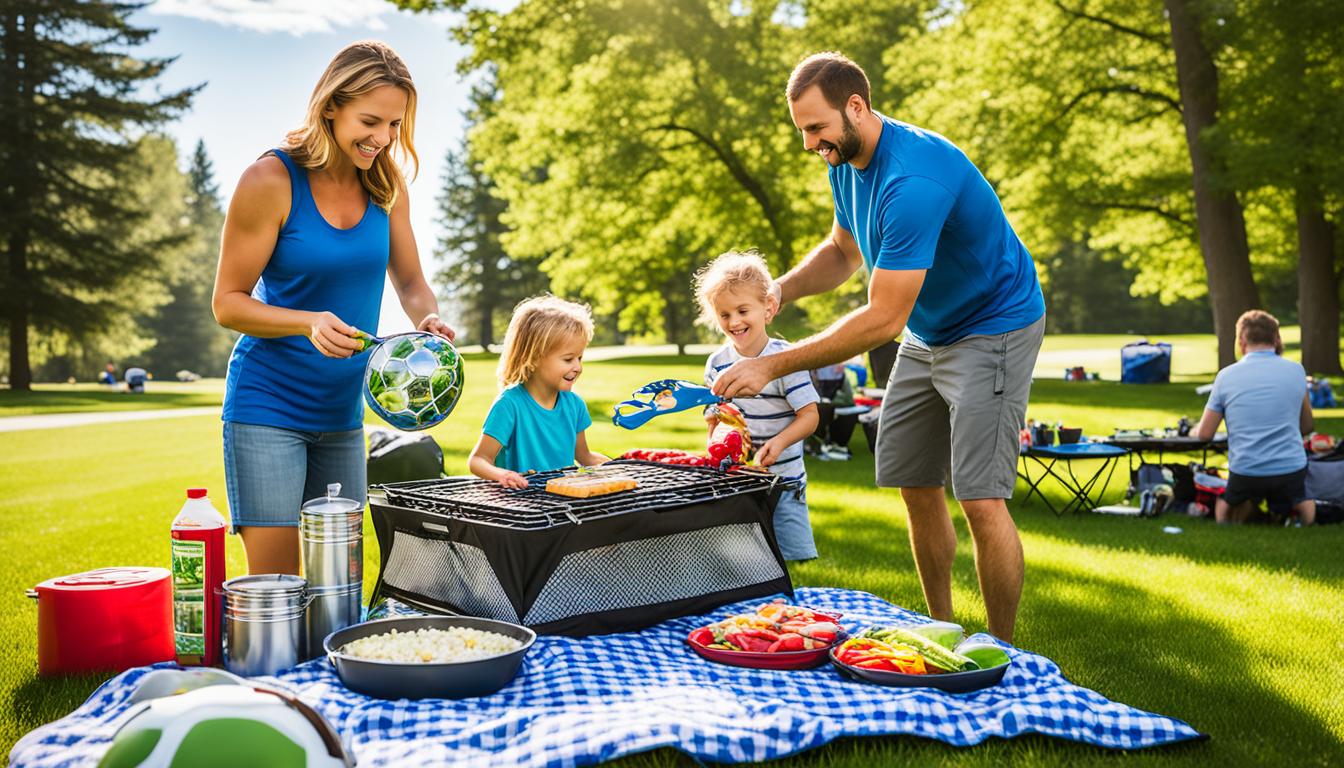
Kids lose more fluids when they play outside and sweat a lot. It’s key to get them to drink water often, even if they’re not thirsty. Using fun water bottles or hydration packs can make it easier for them.
Seniors might not feel thirsty as much as they get older. This can lead to dehydration, especially with outdoor activities. It’s important to remind them to drink water and make it easy to get water.
Knowing what kids and seniors need for hydration helps us keep them healthy and happy outside.
Staying Hydrated: A Holistic Approach to Outdoor Wellbeing
Staying hydrated is key to enjoying and staying healthy during outdoor activities. This section covers how to keep up with hydration, nutrition, rest, and sun protection. These steps help you stay healthy and perform well on your next outdoor trip.
What you eat greatly affects your hydration. Eating foods rich in fruits, veggies, and electrolytes helps your body stay hydrated. Also, getting enough rest lets your body recharge and be ready for more activities.
Protecting yourself from the sun is also vital for staying hydrated. Keeping your skin safe from the sun’s harmful rays helps prevent dehydration and sunburns. A good plan that includes staying hydrated, eating well, resting, and protecting from the sun makes outdoor activities more enjoyable and healthy.