Turning your backyard into a lush garden oasis is a rewarding journey. It creates a peaceful retreat right outside your door. This guide will help you through the key steps to make your outdoor garden. You’ll learn how to assess your space, pick the right plants, and keep your garden vibrant.
Whether you’re experienced or new to gardening, this article will give you the knowledge and tools you need. We’ll cover everything from checking the sun exposure and measuring your garden to planning the layout and choosing the best plants for your area. Let’s start and discover the magic of your own backyard garden paradise.
Assessing Your Backyard Space
Before planning your dream backyard garden, it’s key to check out your outdoor space first. This step helps you decide on the layout, plants, and design of your garden.
Evaluating Sun Exposure
Looking at how much sunlight your backyard gets is very important. Watch where the sun moves and see where it shines the most, where it’s partly shaded, or fully shaded. This info is key for picking the right plants that like sun, need some shade, or love the shade.
Measuring the Area
Then, figure out how big your backyard is. Knowing its size lets you plan your garden well and fit in everything you want, like raised beds, paths, and places to sit. Getting the right measurements helps you pick the right size for your garden and avoid too many plants.
By checking your backyard’s sun and measuring its size, you can make a garden that meets your needs and looks great.
Planning Your Outdoor Garden Layout
After checking your backyard and picking the best spot for plants, it’s time to plan your garden’s layout. This step is key to making a beautiful and connected outdoor space. Think about how people will move through the garden, what catches the eye, and how to keep things balanced.
Looking at how people move in your backyard is important for a good garden plan. Find out where most people walk and put paths or stepping stones to help them move around. This makes your garden easy to use and keeps plants safe from being stepped on.
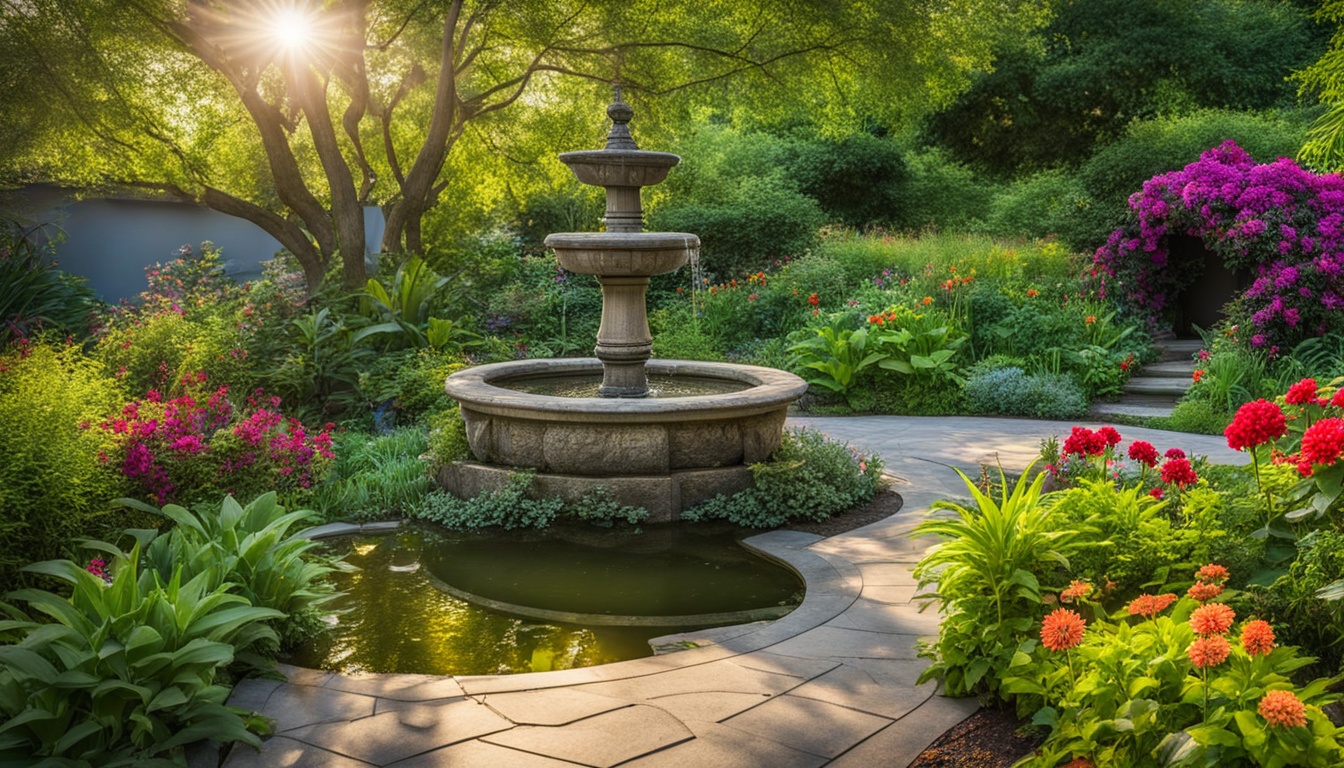
Adding special features like a beautiful water feature or a striking sculpture can make your garden stand out. Place these items to catch the eye and balance the space. Use plants and design elements that match the look you want.
Try to keep your garden balanced when planning it out. Put plants of the same size, color, and texture together in groups. This makes your garden look planned and nice, not messy. By thinking about these things, you can make a garden that looks great and works well.
Selecting Plants for Your Climate
Choosing the right garden plants is key to a successful backyard. Make sure to pick plants that do well in your local climate. This ensures your garden will be vibrant and full of life.
Look into the specific needs of different plants. This includes vegetables, herbs, flowers, and decorative plants. Make sure they can grow well in your area.
Choosing Vegetables and Herbs
Many people enjoy growing their own food at home. When picking vegetables and herbs, think about the sun, soil, and temperature in your area. For warm places, tomatoes, peppers, and basil are great choices.
In cooler areas, leafy greens, carrots, and parsley work better. This way, you can grow what fits your climate best.
Incorporating Flowers and Decorative Plants
Adding color and beauty to your backyard is easy with the right plants. Look for plants that can handle your climate’s dry or cold spots. You can use annuals, perennials, and shrubs to make your garden stand out.

Preparing the Soil
Healthy soil is key for a thriving garden. Before planting, make sure your backyard soil is ready. This means testing and amending it for your plants.
Testing and Amending Soil
Start by testing your soil. This tells you about its composition and nutrient levels. Knowing what your soil needs helps you make it better for your plants.
After testing, amend the soil if needed. Add things like compost or manure to improve its structure and fertility. You might also need to change the pH levels with lime or sulfur.
Getting the soil right is vital for a great garden. By testing and adjusting the soil, you’re helping your plants grow well. This means a better harvest in the future.
Installing Raised Beds or In-ground Plots
Creating your backyard garden can be done in two ways: building raised beds or planting directly in the ground. Each method has its own benefits. The best choice depends on soil quality, how easy it is to get to, and what you like.
Raised garden beds have many advantages. They let you use top-quality soil for your plants. This is great if your soil isn’t good or lacks nutrients. Raised beds also help control weeds and pests. They’re easier to reach for people who have trouble moving around. But, making raised beds takes some work and money for materials like wood or composite boards.
In-ground garden plots are simpler and cheaper. If your soil is already good and drains well, you can just till it and plant. These plots blend well with nature. But, they might get more weeds and be harder to work in over time.
Choosing between raised beds or in-ground plots depends on what you need and like. Think about how much space you have, the quality of your soil, and your gardening skills. This will help you pick the best way for your garden.
Outdoor Irrigation and Watering Techniques
Proper watering is key for your backyard garden’s health and growth. Trying out different outdoor garden irrigation methods, like a drip irrigation system, helps your plants get the right water efficiently.
Setting Up a Drip Irrigation System
A drip irrigation system is a smart choice for watering your outdoor garden. It waters your plants slowly and directly at their roots. This cuts down on water waste and helps plants grow stronger. Adding a drip irrigation system can really change your gardening game.
First, look at your garden’s layout to figure out where to put the drip lines. You’ll need to think about the water flow, pressure, and coverage to make sure your plants get enough moisture. With the right setup, a drip irrigation system is easy to maintain and saves water in your backyard garden.

Using outdoor garden irrigation like a drip system keeps your plants healthy while saving water and reducing your work. Look into different watering methods to find the best fit for your garden.
Maintaining Your Backyard Garden
Gardening is a rewarding hobby that needs regular upkeep to stay beautiful. Keeping up with garden maintenance helps control weeds, keeps moisture in, and guards against pests. By spending a little time each week on tasks like weeding, mulching, and pest control, your garden will stay lush and vibrant all season.
Weeding and Mulching
Weeding is crucial to keep your garden healthy. It stops unwanted plants from taking over your garden. Pull weeds often, before they spread or produce seeds. Weeding works best after rain or when the soil is soft.
Adding organic mulch around your plants is also a good idea. Mulch keeps the soil moist, stops weeds from growing, and protects roots. This simple step can make a big difference in your garden’s health.
Pest Control Methods
Pests can be a big problem in gardens, but there are safe ways to deal with them. Watch your plants closely for any signs of pests and act fast if you see any. Use methods like handpicking pests, introducing helpful insects, or organic pesticides to protect your garden.
By keeping up with garden care and using smart pest control, you can enjoy a beautiful garden. This way, you can have a garden full of life and beauty.
Harvesting and Enjoying Your Bounty
Keeping a backyard garden lets you enjoy fresh, nutritious fruits, vegetables, and herbs. Learning how to harvest right makes sure your garden’s produce is the best it can be. It also helps you use your home-grown food to the fullest.
Harvesting at the right time is crucial. Look for signs like size, color, and texture to know when to pick. When you pick, be gentle to avoid hurting the plant or nearby plants. This helps the plant keep producing and gives you more food later.
After picking your garden’s treasures, the fun really starts! Use them in tasty recipes like salads, stir-fries, or roasted veggies. You’ll love knowing your food came from your own garden. It’s a great feeling.
But there’s more to a backyard garden than just picking food. Growing your own food is healthier and better for the planet. It also connects you to nature and makes you appreciate how food grows. Enjoy your garden’s harvest and feel proud of your backyard oasis.
Extending the Growing Season
Learn how to make your garden bloom all year with year-round gardening tips. With a few smart changes, you can keep your backyard garden alive through all seasons. Discover how to use cold-weather gardening and make your outdoor area perfect for many plants.
To make your garden last longer, try using cold frames, greenhouses, or row covers. These tools protect your plants from frost and bad weather. They create a special climate that keeps your plants safe, letting you grow greens, root veggies, and other cool-season crops into fall and even winter.
Also, pick plants that can handle the cold. There are many plants like brassicas and frost-resistant herbs that do well in the cold. By choosing a variety of plants, you can have a garden that gives you food for more months.