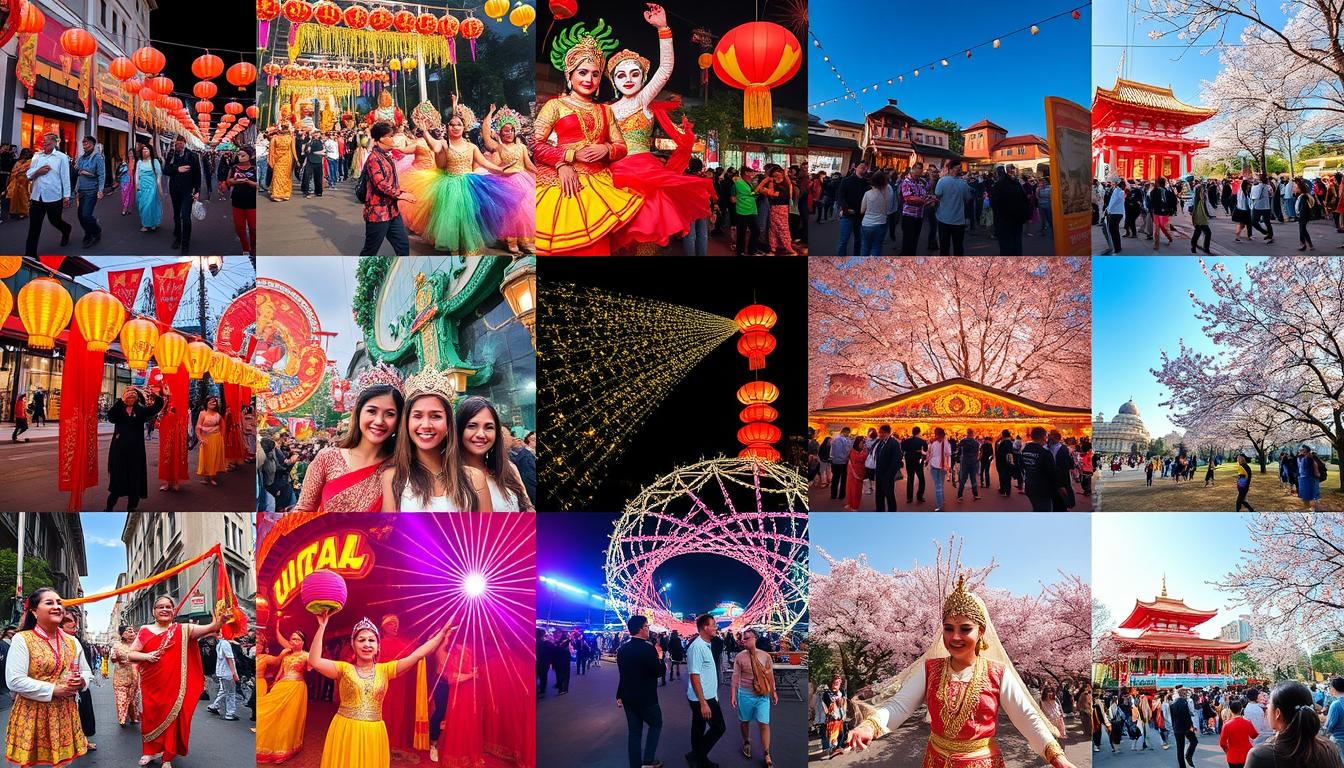
Festivals are the heartbeat of the world. They show the vibrant traditions and cultural diversity that make our global community special. From ancient rituals to modern celebrations, these events highlight the rich tapestry of human experience. They bring people together, showing the beauty and wonder of our world.
Take the colorful Holi festival in India, the vibrant Carnival in Brazil, or the serene Lantern Festival in Taiwan. Festivals give us a peek into the unique customs and values of different regions and communities. These celebrations are more than just fun; they are expressions of beliefs, histories, and aspirations that make each culture unique.
Exploring festivals around the globe invites us to see the world through different eyes. We get to immerse ourselves in traditions that may seem new yet hold deep universal truths. By embracing these cultural celebrations, we broaden our perspectives and build connections that go beyond language, geography, and belief.
In the next pages, we’ll discover the significance, symbolism, and joy of the world’s most iconic festivals. Join us as we dive into the heart of these cultural touchstones. We’ll uncover the stories passed down through generations and the legacies that shape our global community.
The Importance of Festivals in Different Cultures
Festivals are more than just fun Cultural Celebrations. They deeply shape the identity and unity of communities worldwide. These Traditional Events help keep heritage alive, bring people together, and boost the economy.
At the core of many festivals is the celebration of a community’s cultural heritage. Music, dance, and shared rituals pass down traditions and values. This way, people feel a strong sense of belonging and pride in their culture.
“Festivals are the heartbeat of a community, keeping its traditions alive and its spirit vibrant.”
Festivals also unite people, creating strong bonds. Neighbors and strangers come together, making memories and experiences that last. This unity boosts a community’s well-being and strength.
The economic benefits of festivals are huge. They bring in money through tourism, sales, and jobs, helping local economies. Festivals also highlight a region’s culture, attracting visitors and investments.
In today’s global world, festivals are key to keeping cultural diversity alive. They connect us to our roots and help us appreciate the richness of human experience.
Iconic Festivals in Europe
Europe is a treasure trove of cultural festivals. Each one shows off the unique traditions of its region. From the Carnival of Venice in Italy to Oktoberfest in Germany, these festivals highlight the continent’s rich cultural diversity.
The Carnival of Venice is a centuries-old tradition. It brings visitors back in time with its masks and costumes. People fill the streets and canals with music, dance, and joy. It started in the 11th century to celebrate a big win.

Oktoberfest in Germany is another famous festival. It draws millions to enjoy Bavarian food, music, and beer. It began in the early 19th century to celebrate a royal wedding.
“Festivals are the heartbeat of a culture, preserving traditions and bringing communities together in joyous celebration.”
La Tomatina in Spain is a fun tomato-throwing event. It started in 1945 and now attracts visitors worldwide. It’s a messy but unforgettable experience.
These festivals are more than just events. They offer a glimpse into Europe’s vibrant culture. They show the strength and joy of the continent’s diverse communities.
Celebrations in Asia: A Melting Pot of Cultures
Asia is a vast and diverse continent. It is home to many traditional events, religious festivals, and cultural celebrations. These events show the rich heritage of the region. From the vibrant Diwali festivities in India to the awe-inspiring Chinese New Year celebrations, these festivals offer a glimpse into the intricate tapestry of Asian cultures.
Diwali, the Festival of Lights, is one of the most widely celebrated Traditional Events in Asia. It is observed in India and other parts of the subcontinent. This Religious Festival honors the triumph of light over darkness, good over evil, and knowledge over ignorance. Families gather to exchange gifts, light candles, and enjoy sumptuous feasts, creating a spirit of unity and joy that resonates across the region.
“Diwali is not just a festival, it’s a way of life. It’s a celebration of the human spirit, of hope, and of the triumph of good over evil.”
The Chinese New Year, also known as the Lunar New Year, is another iconic Cultural Celebration in Asia. It is celebrated across East Asia. This festival marks the beginning of a new lunar cycle and is a time of renewal, family reunions, and festive traditions. From the colorful dragon dances to the exchanging of red envelopes, the Chinese New Year festivities showcase the rich cultural heritage of the region.
In Thailand, the Songkran festival, also known as the Thai New Year, is a lively Cultural Celebration. It involves water-based activities and ceremonies. This joyous event is a time for cleansing, renewal, and the strengthening of community bonds. Revelers take part in elaborate water fights, temple visits, and the pouring of scented water over Buddha statues and elders, creating a vibrant and festive atmosphere.
These are just a few examples of the diverse Celebrations in Asia. They showcase the region’s deep-rooted traditions, religious beliefs, and cultural heritage. From the Traditional Events that have been passed down through generations to the Religious Festivals that unite communities, these Cultural Celebrations are a testament to the richness and diversity of the Asian continent.
North American Festivals: Diverse and Inclusive
North America is known for its lively festival scene. It celebrates the area’s cultural diversity. Events like Mardi Gras in New Orleans and Coachella in California show the mix of cultures here.
The Toronto International Film Festival is a highlight. It’s a global event for film lovers. It brings together filmmakers, actors, and fans from everywhere, celebrating storytelling.
“Festivals are not just about entertainment – they are a celebration of our shared humanity, a chance to come together and appreciate the diversity that makes us stronger.”
These festivals do more than entertain. They promote inclusivity and diversity. They give a voice to marginalized communities, helping people understand each other better.

From Carnival’s rhythms in the Caribbean to the New York Film Festival’s art, North American festivals are inspiring. They celebrate the rich cultural mix of this region.
Exploring Festivals in Africa
Africa is a continent full of cultural diversity. Its festivals show the vibrant traditions that shape its people’s lives. From the Traditional Events in the Sahara to the Cultural Celebrations honoring spiritual heritage, these Local Festivities reveal Africa’s soul.
The Gerewol Festival in Chad is a captivating event. The Wodaabe people gather to show their beauty through face paintings, costumes, and dances. This Traditional Event celebrates the Wodaabe’s culture and helps young men find mates.
“The Gerewol Festival is a stunning display of African heritage, where the Wodaabe people come together to honor their traditions and connect with their ancestral roots.”
In Ethiopia, the Cultural Celebration of Timkat is a highlight. It commemorates the Epiphany with processions, Jesus’ baptism reenactment, and sacred water blessings. The Local Festivities around Timkat show Ethiopia’s rich Christian heritage and spiritual nature.
In Morocco’s heart, the Fes Festival of World Sacred Music celebrates multicultural heritage. This Local Festivities event gathers musicians, artists, and spiritual leaders from worldwide. It creates a mix of Cultural Celebrations that honor music and the divine.
These examples show the amazing Traditional Events, Cultural Celebrations, and Local Festivities in Africa. They make Africa a unique and captivating place for festival-goers. Joining these celebrations is a powerful way to connect with Africa’s rich history and diverse cultures.
South American Festivals: Rhythm and Color
South America is full of vibrant festivals like the Carnival in Rio de Janeiro and the Inti Raymi in Peru. These events show the region’s rich culture and joy. They are more than just celebrations; they are a sign of the South American people’s strength and creativity.
The Carnival in Rio de Janeiro is a famous Music Festival. It’s a colorful and lively event with millions of people. They wear amazing costumes and dance to samba music. It’s a time to celebrate life, unity, and the Brazilian spirit.
“Carnival in Rio is not just a festival, it’s a way of life. It’s a time when the city comes alive with music, dance, and a palpable sense of joy and community.”
In the Andes, the Inti Raymi festival honors the Inca sun god, Inti. This festival, from the 15th century, shows traditional music, dance, and rituals. It’s a big hit with both locals and visitors.

In Argentina’s wine country, the Mendoza Wine Harvest Festival celebrates wine. The event has music, concerts, and grape treading. It’s set against the stunning Andes Mountains.
These festivals in South America are more than fun. They show the region’s strong culture and spirit. From the lively music to the traditions passed down, these festivals give a peek into South America’s heart.
Unique Festivals in Australia and New Zealand
Australia and New Zealand have some amazing Local Festivities. These show off the rich Cultural Celebrations and Community Gatherings of the area. Events like the Sydney Festival and the Pasifika Festival in New Zealand let us see the diverse artistic expressions and Indigenous heritage of Oceania.
The Sydney Festival happens every January. It’s a big celebration of music, dance, theater, and visual arts. It mixes traditional and modern performances, showing off the local creativity and energy.
The Darwin Festival focuses on the Northern Territory’s unique mix of Indigenous and multicultural influences. It’s all about storytelling, art, and food.
“The Sydney Festival is a true reflection of the city’s vibrant cultural landscape, bringing together artists and audiences from all walks of life.”
In New Zealand, the Pasifika Festival in Auckland is a colorful celebration of Pacific Islands’ cultures. It has traditional music, dance, and food, along with modern art and crafts. It’s a chance to dive into the rich heritage of the Pacific Islands.
These festivals are more than just fun events. They highlight the rich Cultural Celebrations of Australia and New Zealand. They also give a voice to Indigenous voices and showcase modern artistic expressions. By going to these festivals, visitors can really understand and appreciate the diverse and changing cultural scene of Oceania.
Environmental and Sustainability Festivals
Global Festivals Around the Globe are now focusing on the environment and sustainability. Events like DGTL in Amsterdam and We Love Green in Paris are leading the way. They turn Cultural Celebrations into chances for change.
DGTL in the Netherlands is a top name in green festivals. It’s all about electronic music and being eco-friendly. It shows how festivals can help protect our planet.
“Festivals have the power to inspire and catalyze positive change. By integrating sustainable solutions, we can create experiences that not only entertain but also educate and empower attendees to be agents of environmental transformation.”
We Love Green in Paris is another example. It mixes music, art, and caring for the planet. It shows how festivals can push for a greener future.

In the U.S., Lightning in a Bottle in California is a big deal for sustainability. It offers workshops, art, and experiences that encourage eco-friendly living. It makes people want to join in on global sustainability efforts.
Festivals Combined with Food Revelries
Food festivals are a mix of cultural celebrations and local festivities. They show off the rich food traditions of different places. Visitors get to taste a variety of dishes, from Maine Lobster Festival to Pizzafest in Naples.
The Singapore Food Festival is a great example. It celebrates the city-state’s diverse food scene. Local chefs and artisans share their skills and love for food. Visitors can try street food, join workshops, and learn the stories behind each dish.
“Food is not just sustenance, it’s a tapestry of traditions, memories, and shared experiences.” – Julia Child
These festivals are not just about food. They also help people from different backgrounds connect. They inspire a deeper appreciation for the food traditions that make local festivities special.
How to Experience Festivals Around the World Safely
Going to Festivals Around the Globe is a rewarding experience. But, it’s important to stay safe and respect local Cultural Celebrations. Start by learning about the festival’s rules, what to wear, and where you can’t go. Also, know the local laws to avoid any mistakes.
Before you go, get your travel plans ready. Make sure you have the right insurance, pack your meds, and check the health advice for your destination. Keep an eye on your stuff, drink water, use sunscreen, and wear comfy shoes.
At the festival, enjoy the fun while staying alert. Follow the local customs and traditions. Be open to new experiences and avoid actions that might offend. Make friends, but be careful not to go anywhere alone at night. By following these tips, you can enjoy the Festivals Around the Globe safely and make unforgettable memories.