Starting in nature photography can be thrilling and a bit scary for beginners. It’s about capturing the beauty of the world around us. This guide will teach you the basics and advanced tips to take amazing photos of landscapes.
Whether you love mountains, lakes, or forests, this article has what you need. You’ll learn about photography basics and how to arrange your shots. We’ll cover everything to help you take stunning photos that show off the world’s beauty.
So, let’s start our journey to capture the natural world’s beauty, one amazing landscape at a time.
Understanding the Basics of Nature Photography
Starting your wildlife photography adventure? Learning the basics of environmental photography is crucial. It helps you take amazing scenic photography in nature. First, get to know the cameras for beginners, like DSLR and mirrorless.
It’s also vital to understand camera settings. Aperture, shutter speed, and ISO are key. They affect your photo’s look.
Light and weather are also important. Nature photography loves natural light. This includes the golden hour, soft overcast skies, and stormy weather. These elements change your scenic photography‘s mood and details.
With time, you’ll know how to use these natural elements. This will make your environmental photography better.
“Photography is the art of observation. It has little to do with the things you see and everything to do with the way you see them.” – Elliott Erwitt
So, learn the basics, try new things with your camera, and let nature inspire you. The most important thing is to dive into the natural world. Observe light and shadow, and capture the essence of what you see.
Essential Gear for Nature Photographers
Capturing the beauty of the outdoors needs more than just a camera. For nature photographers, the right Outdoor Photography gear is key to stunning images. Each piece, from cameras and lenses to tripods and filters, is vital in the creative process.
The camera is at the heart of any Adventure Photography setup. Choose a DSLR or mirrorless system that can handle nature photography’s demands. Look for image quality, low-light performance, and weather-sealing to ensure your camera can face the elements.

Lenses are crucial for your nature photography kit. Wide-angle lenses are great for sweeping landscapes. Telephoto lenses let you zoom in on distant subjects. Prime lenses offer exceptional image quality and fast apertures.
“The quality of the equipment is secondary to the quality of the photographer’s eye.”
A sturdy tripod is essential for nature photographers. It provides stability for long exposures and capturing movement in low light. Filters, like neutral density and polarizing filters, enhance your images by controlling light and reducing glare.
Lastly, remember to pack protective gear like weatherproof clothing and sturdy hiking boots. A camera bag keeps your equipment safe from the elements. With the right Outdoor Photography and Adventure Photography gear, you’ll be ready to capture the natural world’s beauty.
Mastering Composition Techniques
In Landscape Photography and Scenic Photography, knowing how to compose is key. These basic rules can make your photos stand out. They grab the viewer’s attention and show your artistic view clearly.
The rule of thirds is a well-known technique. It divides your frame into a 3×3 grid. Place your subject on the lines or points for balance and interest.
“The rule of thirds is a powerful tool, but it’s not the only way to compose a stunning landscape photograph. Experiment with leading lines, framing, and the strategic placement of foreground elements to add depth, tension, and visual interest to your images.”
Leading lines, like roads or rivers, guide the viewer’s eye. They add depth and highlight the main subject. Framing uses elements to frame your subject, focusing attention.
Foreground elements add depth and dimension. Interesting textures or shapes in the front make your photo feel layered. This engages the viewer and boosts your image’s impact.
Composition is a journey, not a destination. The more you try these techniques, the better you’ll get. You’ll learn what makes a Landscape or Scenic Photography photo great.
Tips for Photographing Different Landscapes
Capturing the essence of diverse landscapes is an art form in Nature Photography and Environmental Photography. Each setting, from majestic mountains to serene forests, has its own challenges and opportunities. Here are some valuable tips to master landscape photography across various terrains.
For stunning mountain scenes, focus on light and shadow. Position your camera to highlight the peaks and valleys. This creates a captivating depth and scale. In forests, use foliage to frame your subject, adding to the composition.

Be patient when shooting beaches or deserts. Capture the sand, water, and sky’s interaction. Also, notice the changing light to enhance your Nature Photography and Environmental Photography shots.
“The camera is an instrument that teaches people how to see without a camera.” – Dorothea Lange
Always be ready to adapt your approach, no matter the terrain. Try different angles, perspectives, and focal lengths. With patience, creativity, and attention to detail, you’ll capture stunning landscape images.
Utilizing Natural Light Effectively
As nature photographers, we often face the challenge of natural light. But with a keen eye and planning, you can use natural light photography to capture stunning outdoor scenes. Let’s explore how to make the most of the available light throughout the day.
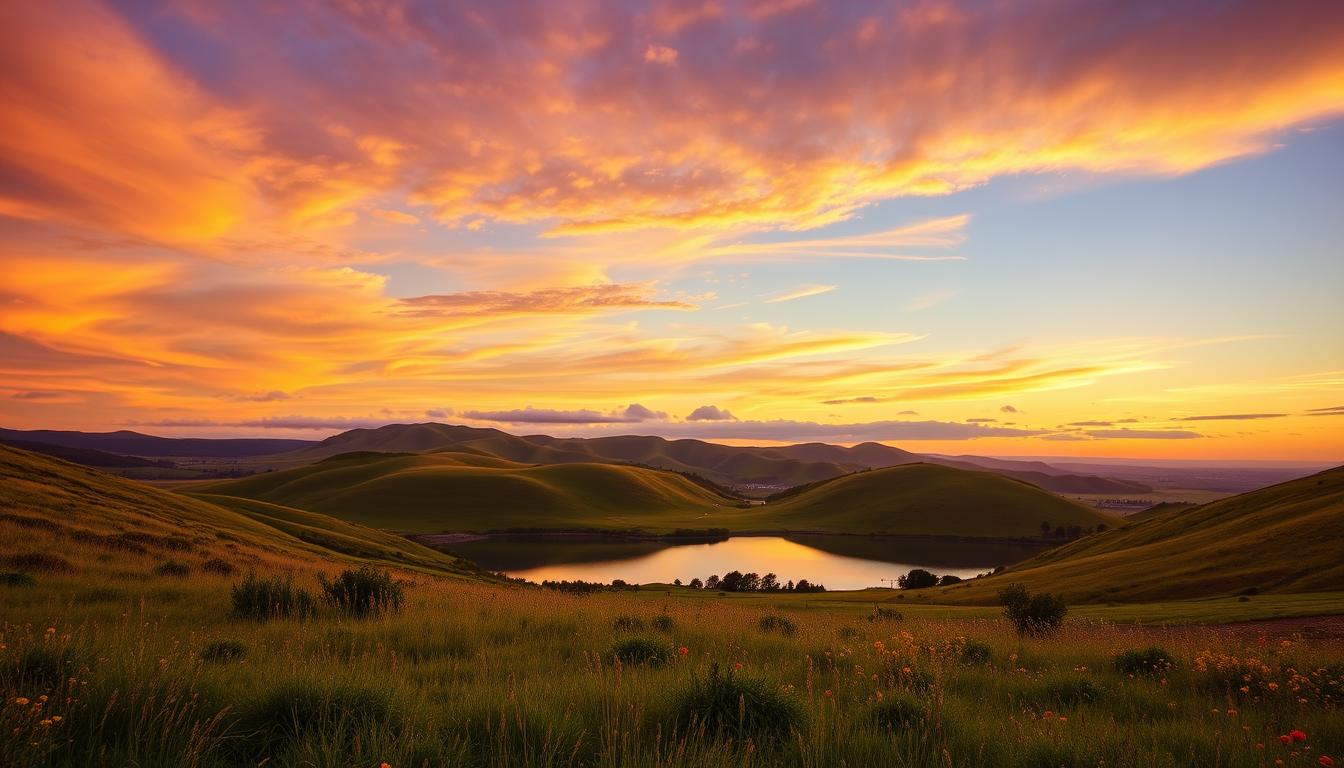
The golden hour, just after sunrise and before sunset, is a dream for nature photographers. The soft, warm sun glow adds an ethereal quality to your outdoor photography. Use the long shadows and vibrant colors to create captivating images.
The harsh midday sun also presents challenges. To deal with harsh highlights and deep shadows, shoot in the shade or use diffusers. Adjust your camera settings to balance the exposure and highlight details in your scenes.
“The quality of light in photography is just as important as the subject itself.” – Galen Rowell
On overcast days, the even light offers a chance for moody, atmospheric shots. Use the soft, flattering light to emphasize texture, patterns, and mood.
No matter the lighting, stay adaptable and experiment. By understanding natural light photography, you’ll create stunning outdoor images that captivate and inspire.
Editing Your Nature Photos
After capturing stunning Landscape Photography and Scenic Photography outdoors, it’s time to refine your images. Editing can turn a good shot into a great one. It helps reveal the true beauty and drama of the scene.
Adobe Lightroom is a top choice for editing nature photos. It offers many adjustments, from basic tweaks to advanced techniques like HDR and focus stacking. With Lightroom, you can make your raw images stand out, capturing the essence of nature.
“The camera is an instrument that teaches people how to see without a camera.” – Dorothea Lange
For advanced Landscape Photography and Scenic Photography, try other editing software like Photoshop. It opens up creative possibilities, from blending exposures to applying filters. The options are endless for enhancing your nature photos.

Effective post-processing balances enhancing beauty and keeping authenticity. By improving your editing skills, you can showcase the best of your Landscape Photography and Scenic Photography. Share your unique view of the outdoors with the world.
Protecting the Environment While Shooting
As nature photographers, we have a special chance to show the beauty of our world. But we must also protect the landscapes and animals we photograph. Conservation photography and environmental photography help spread awareness and encourage people to care for nature.
When we go outside, we should always leave no trace. This means we must be careful not to harm the environment. We should not step on plants, disturb animals, and throw away trash correctly. By following these rules, our photos can help, not hurt, the places we visit.
“The true art of photography is to capture a moment that communicates a story without words.” – Larry Burrows
Nature photographers can also help by sharing our work. Our amazing photos and stories can make people care more about nature. They can help change policies and inspire action.
As we keep exploring nature with our cameras, let’s remember our bigger role. We’re not just taking pictures; we’re guardians of the places we shoot. By practicing sustainable photography and supporting conservation, we help keep nature beautiful for future generations.
Building Your Portfolio
Starting your nature photography journey means building a strong portfolio. Your portfolio shows your skills, style, and vision. It helps you connect with clients, exhibitions, and other photographers.
Be selective when picking images for your portfolio. Choose ones that show the beauty of nature and your technical skill. Landscape Photography and Nature Photography are key, as they appeal to your audience.
Organize your portfolio in a way that makes sense. Group images by theme, location, or mood. This tells a story and shows your range. Use online platforms like Behance, Flickr, or your website to share your work.
“A good portfolio is not about quantity, but quality. Focus on presenting your strongest, most impactful images.”
Keep improving and update your portfolio often. This ensures it shows your growing style and skills in Landscape Photography and Nature Photography. Engage with the photography community, get feedback, and learn from the best.

Your portfolio is a powerful tool for new opportunities and inspiring others. Create it with care, creativity, and a passion for Landscape Photography and Nature Photography.
Learning from the Masters
Aspiring wildlife photographers and scenic photographers can learn a lot from famous nature photography masters. These artists have spent years perfecting their craft. They’ve developed unique styles and techniques to capture the natural world’s beauty in stunning ways.
Ansel Adams is one such master. His black-and-white landscape photos are iconic. Adams focused on light, composition, and contrast. This has inspired many to see the world differently through their lens.
“There are always two people in every picture: the photographer and the viewer.” – Ansel Adams
Steve Bloom is another famous wildlife photographer. His close-up animal portraits from all over the world have amazed many. Bloom’s skill in connecting with animals and showing their personalities is impressive. Learning from him can help you capture the essence of your subjects.
Learning from the masters can deepen your understanding of wildlife photography and scenic photography. Their work can inspire you to try new things, be creative, and find your own style as a nature photographer.
Conclusion: Your Journey in Nature Photography
Starting your journey in nature photography is exciting. It’s a never-ending learning path. The skills and techniques from this article are just the start.
Keep practicing and exploring the outdoors. This will help you improve your Nature Photography, Outdoor Photography, and Adventure Photography skills.
Capturing stunning landscapes and wildlife is incredibly rewarding. Each trip offers new challenges and chances to be creative. Stay curious and patient, always looking for new inspiration.
The real joy of nature photography is the journey, not just the photos. Enjoy the thrill of discovery and the peace of nature. As you keep exploring, your love for Nature Photography will grow.