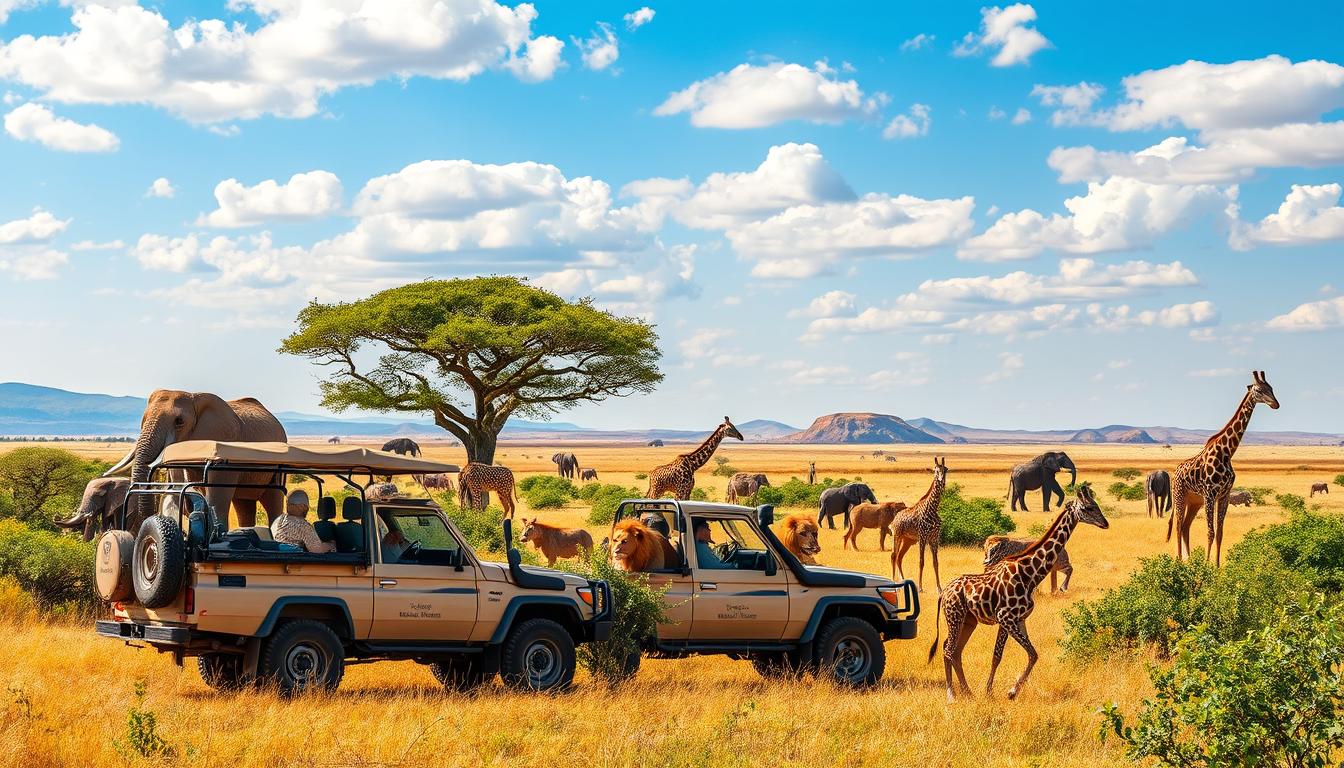
Start an exciting journey into nature with a wildlife safari. These adventures let you see the beauty and wonder of animals up close. Whether you’re experienced or new, planning a great safari needs careful thought.
In this guide, we’ll cover the basics of wildlife safaris. We’ll talk about what they are and how to plan your trip. You’ll learn about choosing the right place and following safari rules. We aim to make your safari unforgettable.
Ready to start your adventure? Explore the magic of wildlife safaris and make memories in the wild.
Understanding Wildlife Safaris: An Overview
Wildlife safaris let you dive into the natural world. You get to see animals up close in their homes. These tours are guided, taking you through untouched habitats.
There are many types of wildlife safaris. Drive safaris take you through big landscapes in a vehicle. Walking safaris let you explore on foot, getting closer to nature. Boat safaris offer a view from the water, showing animals from a new angle.
“Responsible and sustainable wildlife tourism not only provides visitors with unforgettable experiences but also plays a crucial role in supporting conservation efforts and local communities.”
Sustainable ecotourism has changed wildlife conservation. It teaches travelers to respect nature. By choosing eco-friendly safaris, you help protect habitats and the animals that live there.
Whether you’re a safari pro or new to it, knowing about wildlife safaris is key. It helps you plan a trip that’s both fun and meaningful.
Choosing the Right Destination
Planning an unforgettable African Safari Tours or Jungle Trekking Expeditions starts with picking the right place. Africa has many safari spots, each with its own wildlife and landscapes.
Kenya and Tanzania are top choices. They have the famous Serengeti and Masai Mara, full of lions, leopards, and elephants. South Africa offers different experiences, like Kruger National Park, the Garden Route, and Cape Town.
“For a truly immersive wildlife experience, consider venturing beyond the classic African destinations. India’s Ranthambore National Park is a premier tiger-viewing destination, while Costa Rica’s Corcovado National Park promises a thrilling Jungle Trekking Expeditions through lush rainforests.”
Think about the wildlife, how easy it is to get to the parks, and what you want to experience. Talk to travel experts to make sure your African Safari Tours fits your interests and budget. This way, you’ll have a trip to remember forever.

The Best Time to Go on a Safari
Going on a Big Game Wildlife Viewing or Nature Exploration Adventures safari is exciting. But, timing is everything to see many animals. The best time varies by region and the animals you want to see.
In Africa, the dry season from June to October is prime for safaris. Animals gather at water sources, making them easy to find. The weather is also better, with cooler temperatures and less rain.
“The dry season is the best time to see the Big Five in action, as they are more visible and active during this period.”
The wet season, from November to May, has its perks too. This is when many animals have their babies. The green landscapes are stunning, and you’ll see more migratory birds.
Think about what you want to see before planning your safari. For the Great Migration in East Africa, go between July and October. If you want to see newborn animals, the wet season is better.
Be flexible and open to surprises on your safari. With good planning and luck, your Big Game Wildlife Viewing or Nature Exploration Adventures will be unforgettable.
Planning Your Safari Itinerary
Creating the perfect safari plan is key to a memorable Wildlife Conservation Experiences and Rainforest Adventure Travel. Start by mixing game drives, nature walks, and cultural visits for a balanced trip. Don’t forget to include rest days to enjoy the stunning views fully.
The length of your safari depends on what you want to see and do. For a full Rainforest Adventure Travel, aim for 7-10 days. This lets you explore different areas and take part in Wildlife Conservation Experiences. If you prefer, a 4-6 day safari can focus on a single area or highlight.
“The true magic of a safari lies in the ability to connect with the natural world, and a well-planned itinerary is the key to unlocking this transformative experience.”
Make sure your safari plan includes chances to help with conservation. Visit wildlife centers or learn about green tourism. These activities make your trip more meaningful and help protect the Wildlife Conservation Experiences you see.

The beauty of a safari is in its surprises and moments of awe. By mixing planned activities with free time, you’ll have a trip you’ll never forget. It’s a mix of Wildlife Conservation Experiences and Rainforest Adventure Travel that will stay with you forever.
Booking Your Safari
When planning your African safari tours, you have two main choices. You can go for a self-drive adventure or a guided tour. Self-driving gives you freedom, but guided tours offer insights from local guides. This makes your trip more immersive and supports sustainable ecotourism.
It’s important to research and choose a reputable tour operator or travel agency. Look for companies that focus on responsible and eco-friendly practices. This ensures a memorable trip and helps local communities and conservation efforts.
“The best safari experiences are those that strike a balance between adventure and respect for the natural world.”
Booking with a trusted provider simplifies the planning process. They handle the logistics, from travel documents to accommodations. This lets you enjoy the stunning sights and sounds of Africa’s wilderness.
Whether you pick self-drive or guided, be open-minded and appreciate the ecosystems. Choosing responsible providers creates lasting memories and helps preserve Africa’s beauty.
Necessary Travel Documentation
Going on a Wildlife Safari or Nature Exploration Adventure needs careful planning. You must get the right travel documents. This includes passports, visas, and vaccination certificates. Having all the necessary papers is key for a smooth trip.
Passports should be valid for at least six months after your trip. Many African countries, where safaris happen, need this to ensure your passport is good for your stay. Some places also ask for blank pages in your passport for stamps.
Visa rules change based on where you’re going and who you are. Look up the visa policies for your destination. Some places, like Kenya and Tanzania, have e-visas you can apply for online. Others need you to apply in person at their embassies.
Proof of vaccination is also important, especially for yellow fever. Many African countries ask for a yellow fever vaccination certificate when you arrive. Talk to your doctor or a travel health expert to make sure you’re up to date on all needed vaccinations.
Finally, getting good travel insurance is a smart move. It can protect you from unexpected things like trip cancellations, medical issues, and lost items.

“Proper preparation is the key to a successful and unforgettable safari experience.”
What to Pack for Your Safari Adventure
Going on a Wilderness Photography Safaris or Jungle Trekking Expeditions means packing smart. Think about the weather and terrain of your destination. Choose lightweight, breathable clothes in neutral colors to blend in.
Don’t forget to pack a hat, sunglasses, and sunscreen for sun protection. These items are key to staying comfortable.
For your camera, a good quality one and various lenses are a must. A sturdy tripod and a telephoto lens for wildlife shots are also important. Bring extra batteries, memory cards, and a portable charger to keep your camera ready.
Comfort and practicality are crucial. Wear comfortable, broken-in shoes and bring a water-resistant jacket for sudden weather changes. A small first-aid kit, insect repellent, and personal medications are also a good idea.
Keep your luggage light and follow airline or safari rules. Many places require small aircraft travel, so pack smart. With the right packing, you’ll enjoy your safari and take amazing photos.
Understanding Safari Etiquette
Going on a wildlife safari means respecting the natural world. Your actions can affect the animals and their homes. By following safari rules, you can enjoy Wildlife Encounters without harming the Big Game Wildlife Viewing.
It’s key to keep a safe distance from animals. Don’t get too close or move suddenly. This can stress them out. Your guide will help you stay at a good distance.
Also, keep your voice down. Loud noises can scare animals and ruin their day. You’re a guest in their home, so be quiet and respectful.
“The true delight is in the finding out rather than in the knowing.” – Isaac Asimov
Guides are very important on a safari. They know a lot about the animals and can make your trip better. Listen to them and follow their advice to keep everyone safe.

By following safari rules, you can make unforgettable memories. Respect the environment, listen to your guides, and enjoy the amazing Wildlife Encounters and Big Game Wildlife Viewing a safari offers.
Preparing for the Unexpected
When you start a wildlife conservation experience or a fun rainforest adventure travel, being ready for surprises is key. Safari trips can be exciting but also come with challenges. You might face dangerous animals or medical emergencies.
One big worry is seeing wildlife up close. These moments are amazing, but it’s important to stay safe. Always listen to your guide’s advice and keep a safe distance. If you meet an animal unexpectedly, stay calm and do what your guide says.
“The beauty and unpredictability of the wilderness are what make safari experiences so captivating, but they also require a certain level of preparedness and vigilance.”
Safari travelers also need to think about health risks. Diseases from insects, heat sickness, and other emergencies can happen. To stay safe, talk to a doctor before you go, get good travel insurance, and bring important medical items.
Being ready for surprises makes your wildlife conservation experience or rainforest adventure travel safer and more fun. With the right preparation, you can handle any challenge that comes your way. You’ll make memories that last a lifetime on your safari adventure.
Creating Lasting Memories
When you start your Wilderness Photography Safaris and Nature Exploration Adventures, make sure to capture everything. Take photos of the stunning landscapes, the amazing wildlife, and the special moments. These pictures will remind you of the incredible journey you’ve been on.
Also, think about keeping a safari journal. Write down your thoughts, feelings, and the amazing things you see. This journal will let you relive the excitement and emotions of your time in the wild. It’s a great way to keep the memories alive.
It’s important to choose souvenirs wisely. Look for items made by local people that help the community and protect the environment. These keepsakes will remind you of your trip and help support the places you loved.