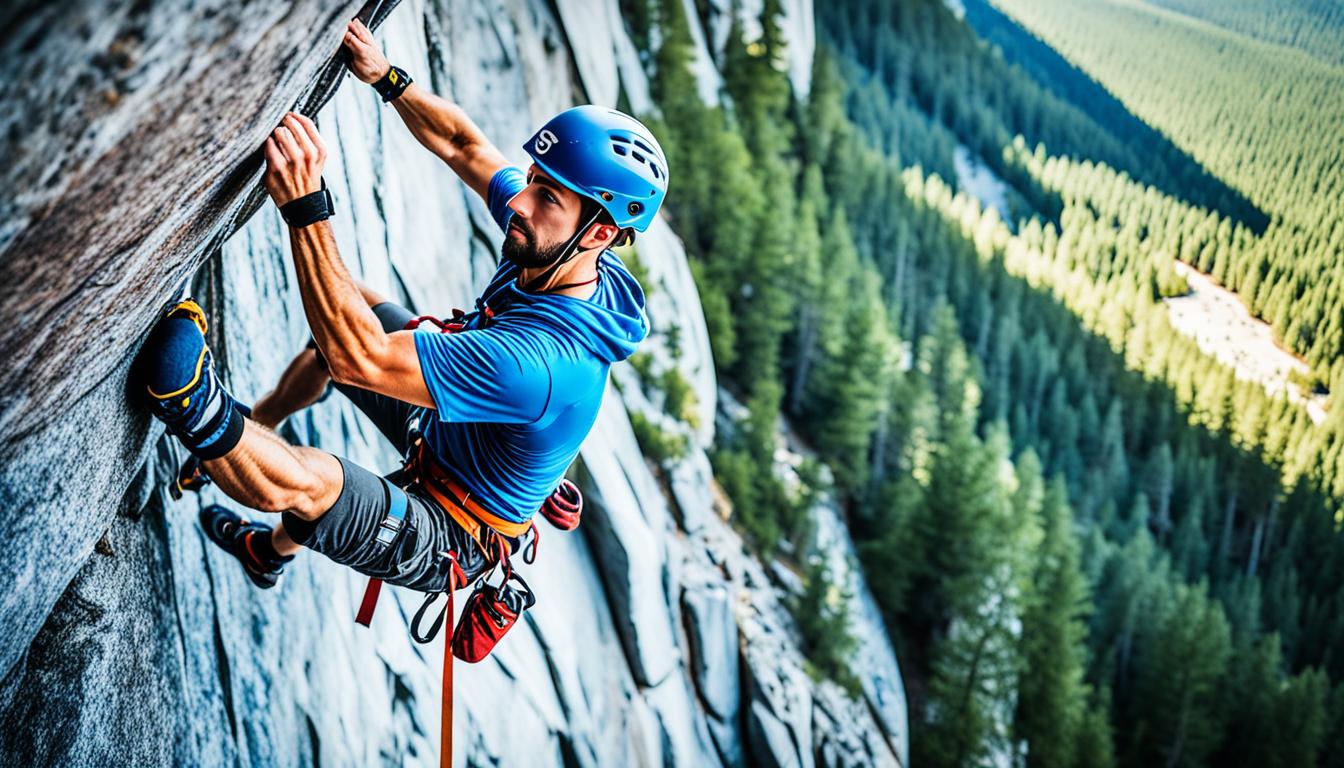
Start an exciting outdoor adventure with these 10 key tips for rock climbing. Whether you’re just starting or you’re already skilled, this guide will give you the knowledge and techniques to climb with confidence.
Learn how to pick the right gear and improve your footwork. Also, develop a positive mindset and stay safe on the rocks. Our tips will help you reach your full potential in rock climbing. You’ll find new routes, fuel up for top performance, and learn how to respect nature.
Get ready to climb higher, push your limits, and feel the joy of overcoming outdoor challenges. Dive into our 10 tips for rock climbing. Start a journey that will make you feel empowered, refreshed, and ready for your next adventure.
Mastering Rock Climbing Basics
Rock climbing is an exciting outdoor activity that needs a good grasp of the basics. Beginners should learn about the essential gear and how to move their feet properly. Having the right gear, like climbing shoes and a harness, is key for staying stable and in control.
Essential Gear for Beginners
Climbing shoes are a must-have for gripping the rock. They should have a sticky sole and fit well to keep your feet secure. A good harness also spreads your weight evenly, letting you focus on climbing without safety worries.
Proper Footwork Techniques
Good footwork is crucial for climbing. Use the balls of your feet and toes to balance. Practice stepping on small holds and trust your feet to hold your weight. These skills will make climbing safer and more efficient.
With the right gear and footwork skills, you’re ready to tackle the rock face. Remember, getting better takes time, so be patient and enjoy the journey.
Outdoor Climbing: Embracing Nature’s Challenges
When you move from indoor climbing gyms to the outdoors, you step into a world full of new challenges. You’ll face different rocks and weather, and you’ll need to adapt. Outdoor climbing is all about learning new skills and being flexible.
Outdoor climbing is different because you can’t predict the rock formations. Indoor walls are steady, but outdoor rocks change a lot. You need to know how to find good hand and foot holds. You also need to change your climbing style to fit the rock.

Weather like wind, rain, and temperature affects outdoor climbing too. Climbers must pick the right gear and clothes for the weather. This keeps them safe and comfy as they climb.
Even with the challenges, outdoor climbing is special and rewarding. It connects climbers with nature in a unique way. Climbers feel the thrill of adventure, see amazing views, and feel proud of reaching the top. By facing nature’s challenges, climbers grow, learn new skills, and appreciate nature more.
Developing a Positive Mindset
Rock climbing is more than just a physical challenge; it’s also a mental one. Having a positive mindset is key to beating fear, gaining confidence, and reaching your full potential. The right climbing mindset can greatly improve your journey.
Overcoming Fear and Building Confidence
Fear is normal when facing the risks of rock climbing, but it shouldn’t stop you. Using mental strategies, you can manage your fear and boost your climbing confidence. Techniques like visualization, positive self-talk, and controlled breathing help you stay focused and calm, even with tough climbs.
Adopting a growth mindset is important. See setbacks as chances to learn and get better. Celebrate your small wins and see each climb as a way to push your limits and grow stronger.
With regular practice and a strong mental approach, you can beat your fears and gain the confidence to conquer tough rock climbing routes. Remember, the true win is in the journey of self-discovery and growth that rock climbing offers.
Staying Safe on the Rocks
Rock climbing is thrilling and rewarding, but it has risks. Making safety a top priority is key to a fun and safe climb. Spotting and belaying are crucial for safety.
Importance of Spotting and Belaying
Spotting and belaying are vital skills for climbers. Spotting means having someone at the bottom ready to catch you if you fall. Belaying is controlling the rope to ensure a safe descent or catch after a fall.
These skills are not just for safety. They also build trust and communication with climbing partners. Together, climbers can push their limits safely.
Climbers should learn about more safety tips too. This includes using the right gear, following safety rules for each route, and knowing your limits. By focusing on safety, climbers can have fun and stay safe.

Choosing the Right Climbing Routes
Choosing the right climbing routes is key for a fun and successful outdoor adventure. As a rock climber, it’s important to know how to pick routes that match your skill level and experience. This guide will help you find the perfect routes for your next climb.
First, think about the route’s difficulty. Look at the grade, height, and technical challenges to make sure it’s right for you. It’s smart to start with routes you’re comfortable with and then try harder ones later.
Planning your route is also crucial. Do your homework on the terrain, rock types, and any dangers you might face. Knowing this info helps you get ready for challenges and stay safe during your climb.
Before you start climbing, assess the route carefully. Check the weather, rock stability, and how easy it is to get to the route. This helps you avoid risks and enjoy your climb more.
By using these tips, you’ll be able to pick routes that challenge you safely. Get ready for some exciting climbs!
Nutrition and Hydration for Rock Climbers
Rock climbing is more than just about strength and agility. It’s also about eating right and drinking enough water. These habits help climbers stay strong and perform well on their adventures. By eating well and drinking plenty of water, climbers get ready for their climbs.
Fuel Your Body for Peak Performance
A balanced diet is crucial for rock climbers. It should have lots of complex carbs, lean proteins, and healthy fats. Carbs give climbers the energy they need. Proteins help muscles recover and repair. Healthy fats keep joints and bones strong and support overall health.
By eating these foods, climbers make sure their bodies are ready for tough climbs.
Drinking enough water is also key for climbers. Not drinking enough can make climbers tired, cause muscle cramps, and lower their performance. Climbers should drink water before, during, and after climbing. This keeps their bodies strong and ready for the next climb.
Building Upper Body Strength
Rock climbing requires a lot of upper body strength. Whether you’re experienced or new, building this strength is key for success. We’ll look at training routines to help you get the strength you need for your next climb.
Targeted Upper Body Exercises
For rock climbing strength, focus on exercises that target key muscle groups. Pull-ups, chin-ups, and rows are great because they work the back, shoulders, and arms. These are the main muscles used in climbing. Adding these exercises to your routine will improve your climbing skills.
Push-ups, dips, and overhead presses also help with climbing. They build the strength and stability you need. Mixing these exercises into your training will help you get stronger for climbing.
Progressive Training Methods
Regular, progressive training is essential for climbing strength. Begin with bodyweight exercises and add resistance as you get stronger. This way, your muscles will grow and prepare you for harder climbs.
Being consistent is important. Make sure to include upper body training in your weekly routine. Be patient as you build the strength you need for your next outdoor adventure.
Rock Climbing Etiquette and Respecting Nature
We, as passionate rock climbers, have a big responsibility. We must respect the natural world and take care of it. By following climbing etiquette and being aware of our impact, we help keep the outdoor spaces we love safe for the future.
The Leave No Trace philosophy is key to this effort. It teaches us to leave as little mark as possible and keep our climbing spots beautiful. Simple actions like properly throwing away trash and not harming nature can greatly help protect these areas.
The climbing community also has a big part to play. By sharing what we know, setting good examples, and pushing for responsible climbing, we encourage others to care for the land. This way, we make sure that future climbers can also enjoy the thrill of climbing.