Outdoor photography lets you capture the beauty of nature in a unique way. It’s great for both experienced photographers and beginners. These 10 expert tips will improve your outdoor photography skills. They help you make beautiful images of nature, landscapes, and wildlife.
Learn how to use natural light and composition to make your photos stand out. This guide also covers the best gear for outdoor photography. With these tips, you’ll be able to take amazing outdoor photos that will amaze everyone.
Capturing Nature’s Beauty: Outdoor Photography
Outdoor photography lets us dive into the natural world and use the power of natural light. Photographers get to capture the beauty that’s right in front of us. From peaceful landscapes to amazing wildlife and stunning sunsets, the outdoors is full of photo opportunities.
Embracing the Great Outdoors
To get better at outdoor photography, you need to really be a part of the natural world. Leave the studio behind and explore the wild. This lets you connect with nature and find inspiration in its untouched beauty. Try new places, go on hikes, and be ready for surprises. The more you connect with nature, the better your outdoor photos will be.
Harnessing Natural Light
Natural lighting is crucial in outdoor photography. The sun, clouds, and light can change a scene, adding shadows and contrasts. Watch how the light changes during the day and adjust your photos to match. Try different lighting setups like backlighting and diffused light for the best effects. Learning to use natural light well can make your outdoor and nature photos stand out.
Essential Gear for Outdoor Shoots
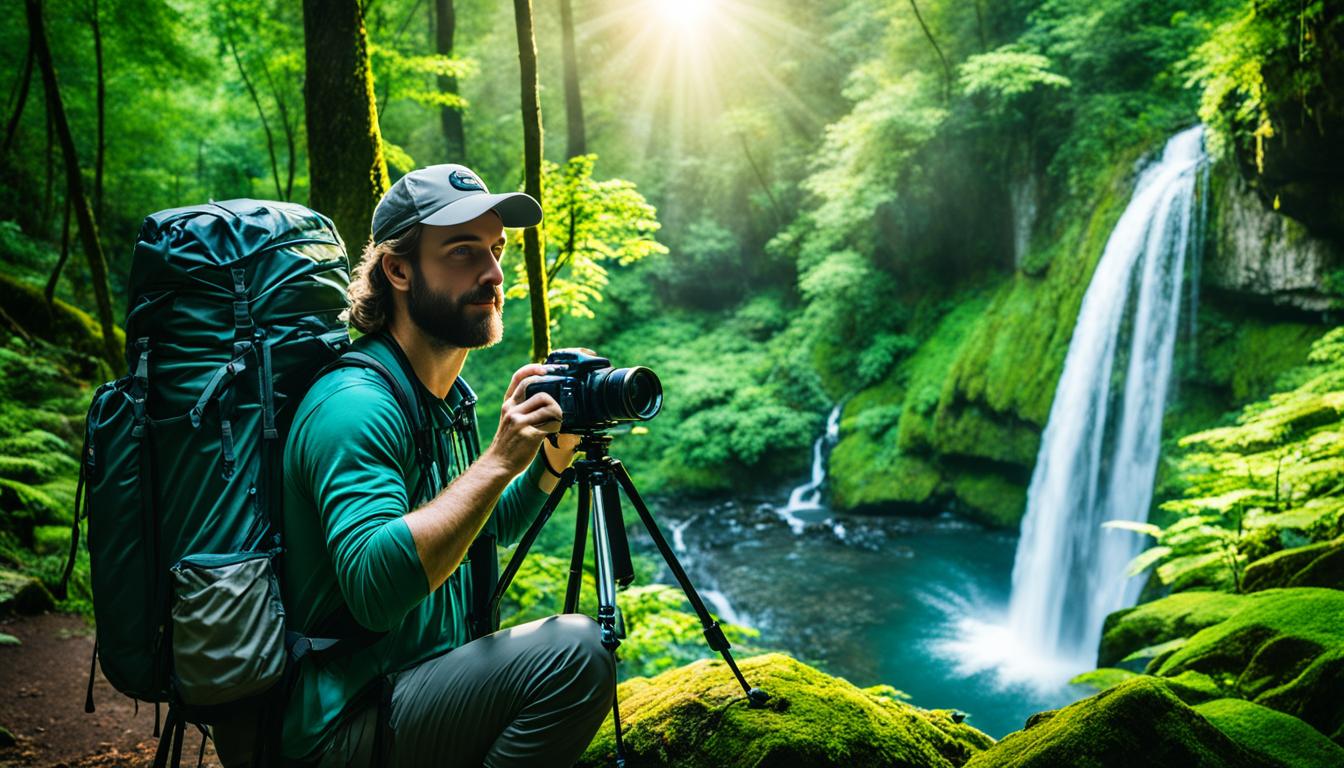
To capture the beauty of the outdoors, you need the right gear. This includes cameras, lenses, tripods, and filters. The right equipment makes a big difference in your photos. Whether you’re shooting landscapes or wildlife, quality gear is key.
Start with a camera that can handle the outdoors. Look for weather-sealing, high-resolution sensors, and fast autofocus. Then, choose lenses that fit your needs, like wide-angle for landscapes or telephoto for wildlife.
A strong tripod is crucial for outdoor photography. It gives you stability for long shots and low-light conditions. Filters like neutral density and polarizing filters are also important. They help control light and improve your photos.
Don’t forget about camera bags, memory cards, and spare batteries. These accessories are vital for outdoor photographers. With the right gear, you can capture the beauty of nature perfectly.
Mastering Composition Techniques
Outdoor photography is all about making your shots stand out. Two key techniques can take your photos from good to great. These are the rule of thirds and leading lines. Learning these can make your outdoor photos more striking and balanced.
Rule of Thirds
The rule of thirds is a key rule in photography. It divides your frame into nine parts with lines. Place your main subject on these lines or where they meet for a balanced look. This avoids the boring center shot and makes your image more appealing.

Leading Lines
Leading lines are great for outdoor photos. They are things like roads, paths, or shadows that lead the eye to your subject. Using these lines adds depth and guides the viewer’s eye, making your photo more engaging.
Practicing these techniques can improve your outdoor photography. With the rule of thirds and leading lines, you can make your photos more beautiful and interesting.
Outdoor Photography in Challenging Conditions
Taking pictures outside can be rewarding but also tough for photographers. One big challenge is the harsh sunlight. It can make pictures too bright and create high-contrast scenes. But, with the right skills, photographers can beat these issues and take amazing photos.
Dealing with Harsh Sunlight
When you’re shooting in bright sunlight, managing the contrast and avoiding overexposure is key. You can do this by adjusting your camera settings like the aperture, shutter speed, and ISO. Also, use shadows to add depth and drama to your photos.
Learning to handle harsh sunlight lets photographers capture the beauty of nature. With practice and the right methods, even tough outdoor photography situations can lead to stunning images.
Outdoor Portraits: Capturing Candid Moments
Outdoor portrait photography lets photographers capture the beauty and spontaneity of their subjects. It uses the outdoors to create stunning, candid portraits. These portraits show the true essence of the people in them.
Candid photography is about catching real moments. In outdoor portraits, focus on your subjects’ real feelings and how they interact with nature. Use things like trees or buildings to make your photos look better and fit the scene.
Outdoor photography is known for its use of natural light. You need to know how to work with the changing light. Try different angles and spots to find the best lighting for your photos. Using the environment to show where your subject fits in can also make your photos stand out.
To make great outdoor portraits, accept the outdoors’ unpredictability. Get good at candid, natural light, and environmental portraiture. This way, you can make outdoor portraits that show the beauty of nature.
Landscape Photography: Capturing Vast Vistas
Landscape photography lets photographers capture the beauty of nature. The right lenses are key to making stunning images. Wide-angle lenses show the vastness of landscapes. Telephoto lenses compress distance and focus on details.
Choosing the Right Lenses
Choosing the right lens is crucial for landscape photography. Wide-angle lenses, from 16mm to 35mm, capture the vastness of scenes. They make the scene look deeper and more expansive.
Telephoto lenses, over 70mm, focus on specific parts of the landscape. This can be distant mountains or details in the foreground.

Trying out different lenses helps photographers find what works best for them. Knowing how wide-angle and telephoto lenses work lets photographers create amazing shots. These shots show the beauty of nature in a powerful way.
Wildlife Photography: Patience and Persistence
Capturing wildlife photos is an art that needs patience, persistence, and respect for nature. As photographers, we must watch and record nature’s beauty without harming the ecosystems we visit.
Respecting Nature
It’s important to keep a safe distance from animals and their homes. Getting too close or disturbing them can stress them out. By respecting their space, we can take amazing photos without harming them.
Patience is crucial for wildlife photography. Sometimes, you’ll wait for hours or even days for the perfect shot. Persistence is also key, as getting the shot you want might take many tries. Learning to predict animal behavior and wait patiently will improve your photos.
By using ethical practices and being patient and persistent, you can make stunning nature photos. Remember, our job is to capture beauty while respecting nature’s balance. We must do this to protect the ecosystems we explore.
Outdoor: Exploring New Perspectives
Outdoor photography is all about stepping out of your comfort zone. It’s about finding new ways to see the world. By trying out different angles and views, you can make your outdoor photos more exciting.
When you explore new perspectives, you make your photos stand out. Outdoor photography becomes a journey of discovery. You find hidden spots and show the world from a new angle. Shooting from low or high up can change how we see things.
To make your photos pop, try new things and be creative. Don’t stick to the usual rules. Play with how you frame your shots and try different angles. This makes your outdoor photos more interesting and captures the beauty of nature.
It’s not just about the technical skills. It’s about being open to new ideas and willing to try. By being adventurous, you open up new creative doors. This can take your outdoor photography to the next level.
Post-Processing Outdoor Images
The post-processing stage is key to making outdoor photos stand out. Using image editing software, photographers can enhance their shots. This brings out the vibrant colors and contrasts that make the images pop.
From stunning landscapes to amazing wildlife portraits, the right post-processing can turn a simple photo into art.
Enhancing Colors and Contrast
When shooting the lush greens of a forest or the bright colors of a sunset, making your photos stand out is crucial. Adjusting the saturation, exposure, and other settings can highlight the beauty of your scene. This makes even the subtle tones bold and impactful, taking your outdoor photos to the next level.
The techniques you use will vary based on the image and what you want to achieve. But the main idea is to use post-processing to make your outdoor photos stunning. With practice and experimentation, you can bring out the best in your outdoor shots. This will capture your audience and show the beauty of nature.