Start your outdoor adventures with these 10 key tips for mountain biking. They’re great for both beginners and experienced riders. This guide will improve your off-road cycling skills and make your trail rides more fun.
Learn about the right gear and how to handle tough terrain. These tips will give you the confidence to take on any mountain biking trip. Enjoy the beauty of nature, challenge yourself, and overcome tough obstacles in mountain biking.
Get ready to take your mountain biking to the next level with these essential tips. Get set for amazing outdoor adventures that will thrill and inspire you.
Mastering Mountain Bike Essentials
Getting into mountain biking is more than just having a bike. You need the right gear and to know the rules of the trail for safety and fun. This section will cover the basics every rider should know.
Proper Gear and Equipment
Start with a quality mountain bike that can tackle tough trails. Look for features like suspension, strong tires, and good brakes. Then, add essential gear like a helmet, gloves, and pads for safety.
Don’t forget tools for fixing your bike on the go. Keep a spare tube, tire levers, and a multi-tool handy to keep your bike in top shape.
Understanding Trail Etiquette
When you’re out there with others, knowing the rules of the trail is key. Always let uphill riders go first and pass carefully. Be aware of your surroundings and respect the trails by staying on them and following “leave no trace” principles.
By following these rules, you help make the trails safe and fun for everyone.
Outdoor: Exploring Nature’s Playground
Mountain biking is more than just a thrill. It’s a way to connect with nature and enjoy the outdoors. As you ride, you’ll see amazing views, quiet forests, and the calm of nature.
Trails wind through mountains, valleys, and hills, each showing off different ecosystems. Whether you’re up for a tough climb or a relaxing ride, you’ll see the beauty of nature. This lets you enjoy the outdoors in a special way.
Mountain biking isn’t just fun; it also makes you care more about the environment. You’ll see different plants and animals, which helps you understand nature better. This can make you want to help protect the places you love.
Fitness and Endurance for Mountain Biking
Being fit and enduring is key for mountain biking. It doesn’t matter if you’re new or have been riding for years. With the right training, you’ll ride better and have more fun.
Training Regimens for Beginners
Starting with cardio and strength training is vital for mountain biking fitness. Beginners should work on endurance with running, cycling, and hiking. Adding strength exercises for the core, legs, and arms will help you tackle tough trails.

Slowly add these fitness parts to your routine to build stamina and strength. Remember, being consistent is important. Stick to a training plan to see great results.
Navigating Challenging Terrain
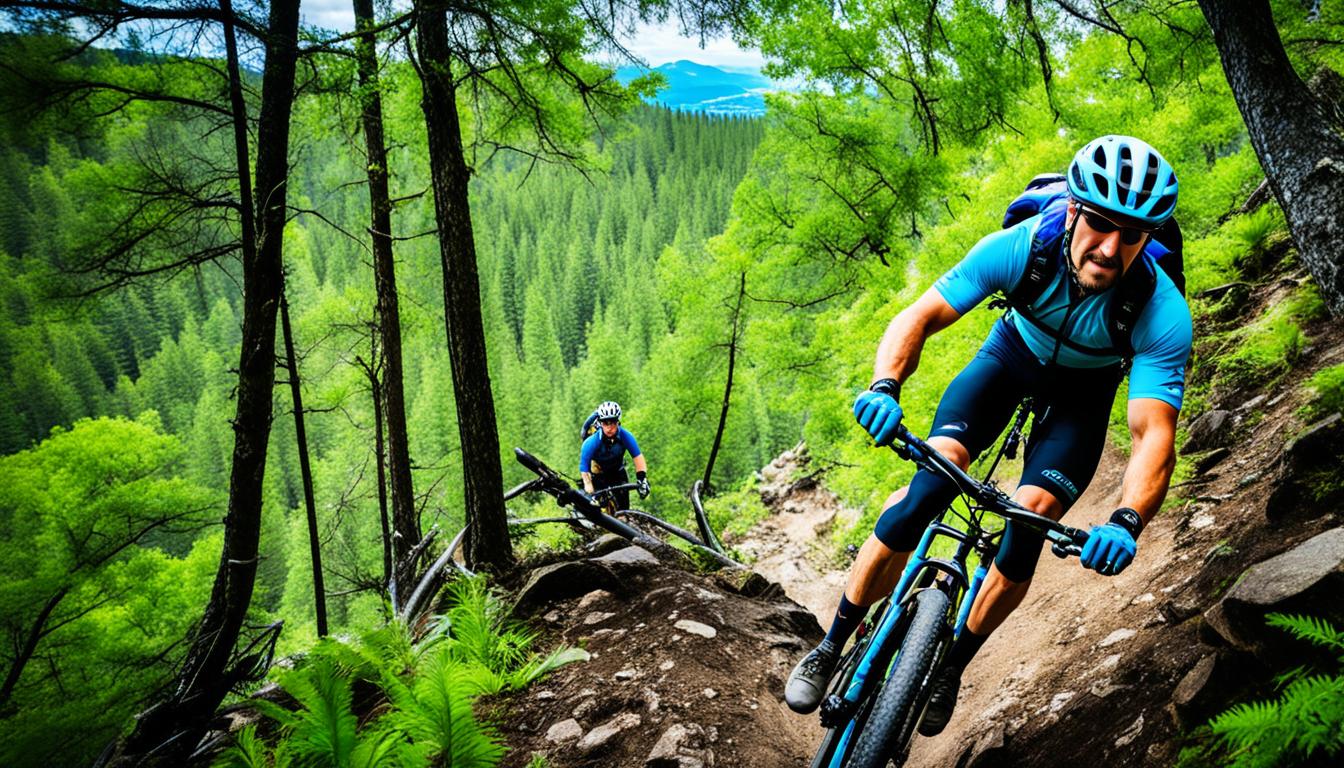
Mountain biking is thrilling because it lets you conquer tough terrain. You’ll face steep drops and tough climbs. Learning to handle different trails makes the ride more exciting.
Getting good at technical mountain biking means reading the trail and adjusting how you ride. When you hit rocky paths or tight turns, knowing how to navigate is key. Lean your body to keep control when going down hills and use smart ascent strategies for steep climbs.
Dealing with obstacles like fallen trees or rough paths needs sharp eyes and quick moves. Learning to see and react to these challenges helps you tackle tough trails.
The joy of mountain biking comes from beating the obstacles. With practice and the right skills, you can handle tough terrain. This opens up a new level of fun on the trails.
Safety First: Preventive Measures
Mountain biking is thrilling, but safety comes first. Wearing the right gear is key to having fun without getting hurt. Helmets, gloves, and pads are a must for every rider, no matter their skill level.
Essential Safety Gear
A good helmet is the most important safety item for bikers. It can save you from serious head injuries. Gloves protect your hands from road rash and help you hold the handlebars tight. Knee and elbow pads are also crucial, keeping you safe from bumps and bruises.
Emergency Preparedness
Being ready for emergencies is just as important as wearing safety gear. A first aid kit can help with minor injuries and keep you safe until help arrives. It’s vital to know how to call for help and stay in touch in remote areas.
Putting safety first with the right gear and plans lets bikers enjoy their rides more. Being alert and proactive can prevent accidents and make the trails safer and more fun.
Trail Maintenance and Stewardship
As mountain bikers, we must protect the trails we love. Keeping trails in good shape is key to environmental conservation. By volunteering and using sustainable practices, we help reduce our sport’s impact. This builds a strong community and sense of shared responsibility.
Local groups often run volunteer programs for trail upkeep. These programs let riders help with tasks like clearing debris and fixing erosion. Volunteering keeps trails great and connects bikers with the land.
We can also use sustainable practices to lessen our impact. This means sticking to marked trails, avoiding sensitive spots, and throwing away trash properly. Doing this keeps trails open and fun for everyone.
Trail upkeep and care are big parts of mountain biking. By helping out and being eco-friendly, we protect the trails and build community. Let’s work together to keep the outdoors beautiful and our trails exciting.

Technical Skills for Advanced Riders
Mountain biking enthusiasts who move up in their skills find a new challenge. Learning to handle jumps and drops is key. It lets riders face obstacles with more confidence and skill. By learning these skills, riders can improve their abilities, do cool aerial moves, and control tough terrain better.
Mastering Jumps and Drops
Jumping and dropping are skills for advanced riders. They need good bike control, the right body position, and a strong mindset. Start with small jumps and slowly move to bigger ones as you get more confident and skilled. It’s important to keep your body in the right spot and move smoothly over the obstacles.
Getting better at mountain biking means understanding how to control your bike and do aerial moves. Practice these skills carefully to get better at handling tough trails. This will make your riding more fun and rewarding.
Learning new skills in mountain biking is a journey of self-discovery. Riders challenge themselves and find new thrills on the trails. By getting good at jumps, drops, and other skills, riders open up new possibilities. This takes their mountain biking to new levels.
Mental Preparation and Focus
Mountain biking is more than just about being physically strong. It’s also a mental challenge. Having a strong focus and being mindful is key to beating the trails and getting past tough spots. Learning how to manage risks and improve your mental game can help you ride better.
Staying focused is crucial for handling tricky paths and making quick decisions. Mindfulness techniques, like deep breathing, keep you calm and focused, even when things get intense. By planning ahead and keeping a positive mindset, you can handle surprises and push your limits.
It’s just as important to beat mental hurdles as it is to improve your physical skills. Techniques like visualization, setting goals, and positive self-talk help you stay motivated. Focusing on the mental side of biking not only betters your performance but also makes it more fun.
Mountain biking tests both your mind and body. Spending time on mental training will help you ride with confidence and enjoy your time on the trails more.
Community and Group Rides
The mountain biking community is vibrant and welcoming. It offers many chances for socializing and sharing skills. By joining group rides, riders meet others who love the sport. They learn from each other and grow to love biking more.
Connecting with Local Clubs
Being part of a local mountain biking club is a great way to get involved. These clubs have regular rides, skills clinics, and events to keep trails in good shape. It’s a place where riders of all levels can help each other and make a difference.
Group rides and club events also build strong bonds among riders. You’ll share stories, get advice on gear, and make friends. This social side of biking makes it more rewarding, turning it into a shared adventure.